
Key Takeaways
- A well-designed anodizing plant increases production efficiency by minimizing rework and rejection rates.
- Automation in anodizing plants eliminates manual handling, boosting productivity and reducing human error.
- Effective tank design from anodizing tank manufacturers in India enhances chemical efficiency and reduces operational costs.
- Optimized layouts lead to faster cycle times, enabling manufacturers to meet growing production demands.
- Reliable equipment prevents downtime and ensures continuous production, safeguarding against delays in delivery.
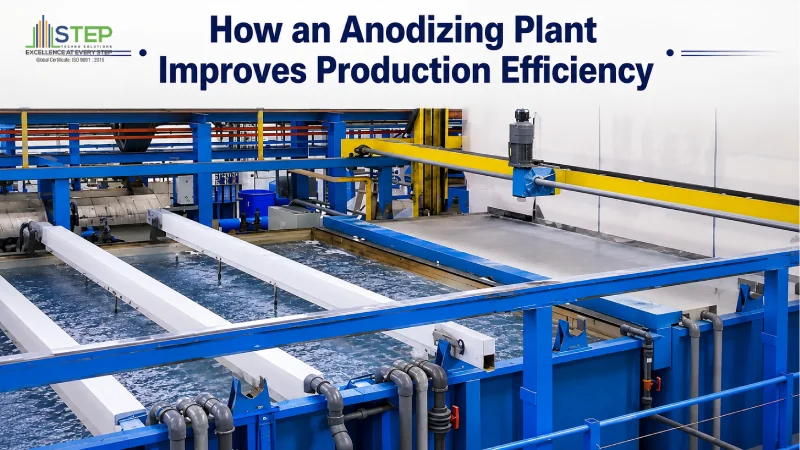
Production efficiency is a major consideration for industries that depend on reliable metal surface treatment. When anodizing operations involve multiple process stages, manual handling, inconsistent process control, or unsuitable equipment, production can become slower and more difficult to manage. A properly designed anodizing plant can bring greater organization to the process while supporting consistent output, operational flexibility, and better control.
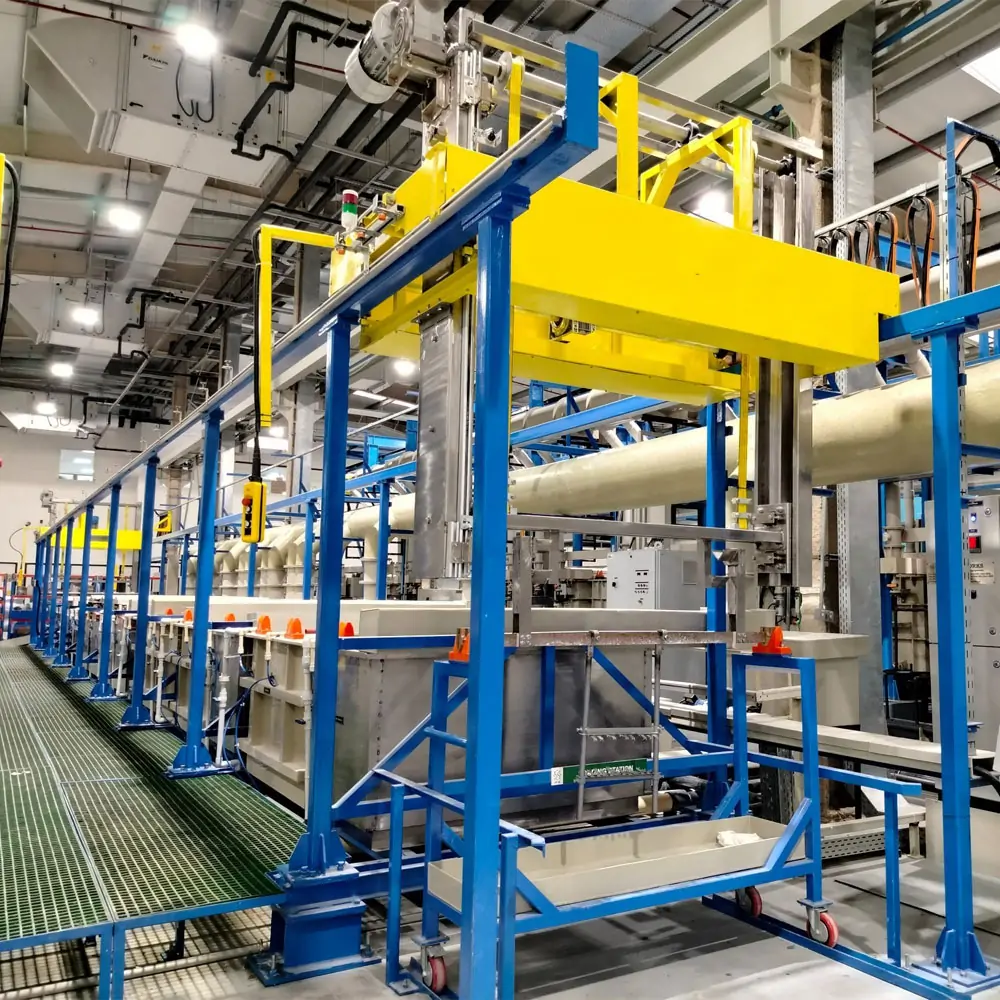
An anodizing plant is designed around the specific requirements of the anodizing process. Depending on production needs, plants can be configured with different automation levels, including manual, semi-automatic, and automatic arrangements. Customization can also be considered for anodizing types, sealing methods, colors, and electro-coloring requirements.
Businesses assessing Indian producers of anodising tanks should consider more than just the tank itself. The overall plant configuration, process requirements, automation level, customization possibilities, equipment integration, safety considerations, and expected production requirements are equally important.
What Is an Anodizing Plant and Why Does It Matter
Anodizing, which is an electrochemical process, is used to apply a protective, corrosion resistant, decorative film of oxide to the surface of a metal, typically aluminium. Anodizing is different from painting or plating, in that the oxide layer is not applied to the surface of the metal, but it is a part of the metal. This results in the final product having higher hardness, wear resistance and longer life even under extreme conditions.
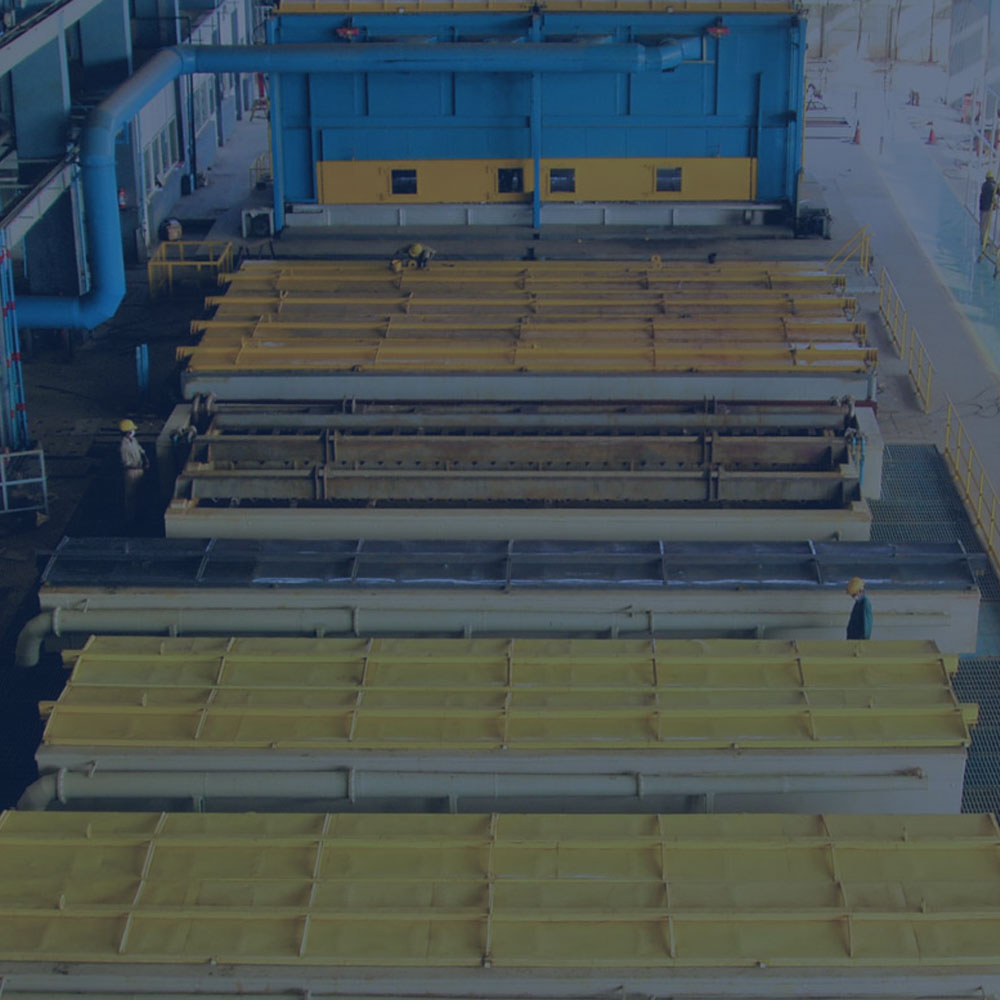
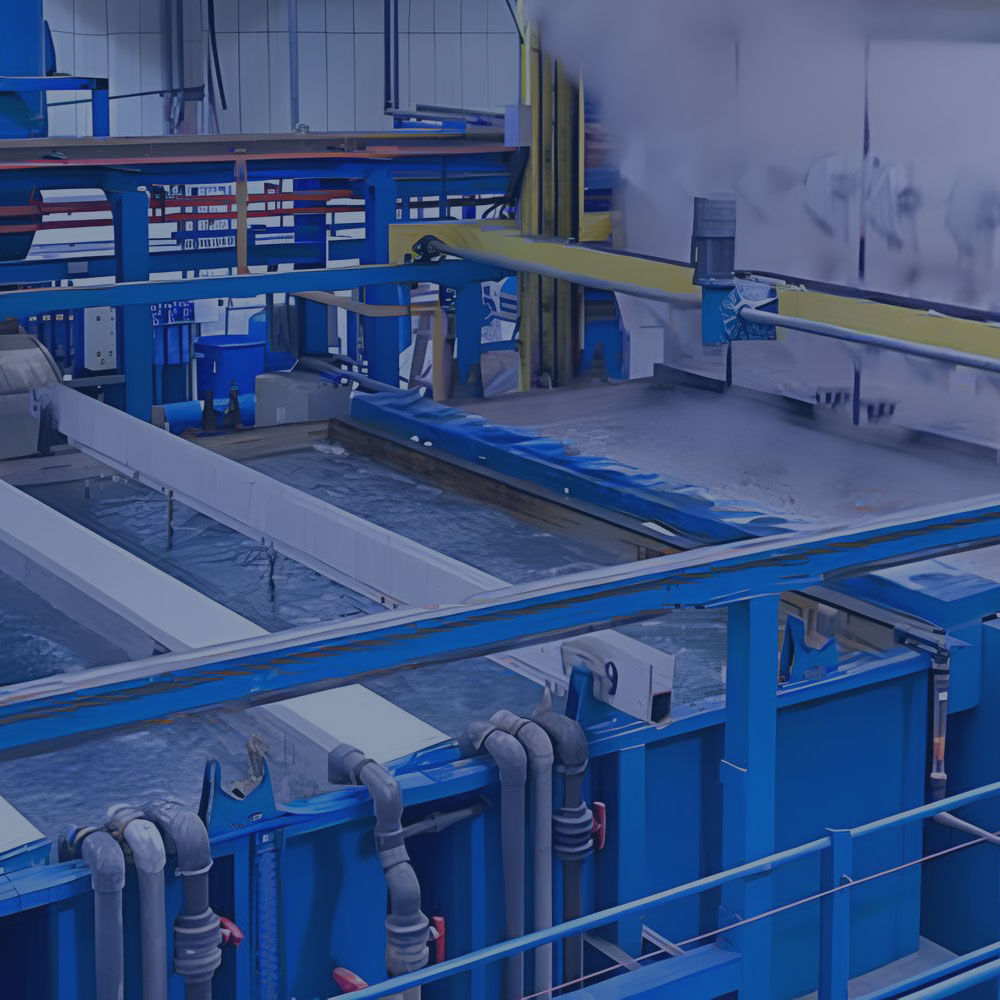
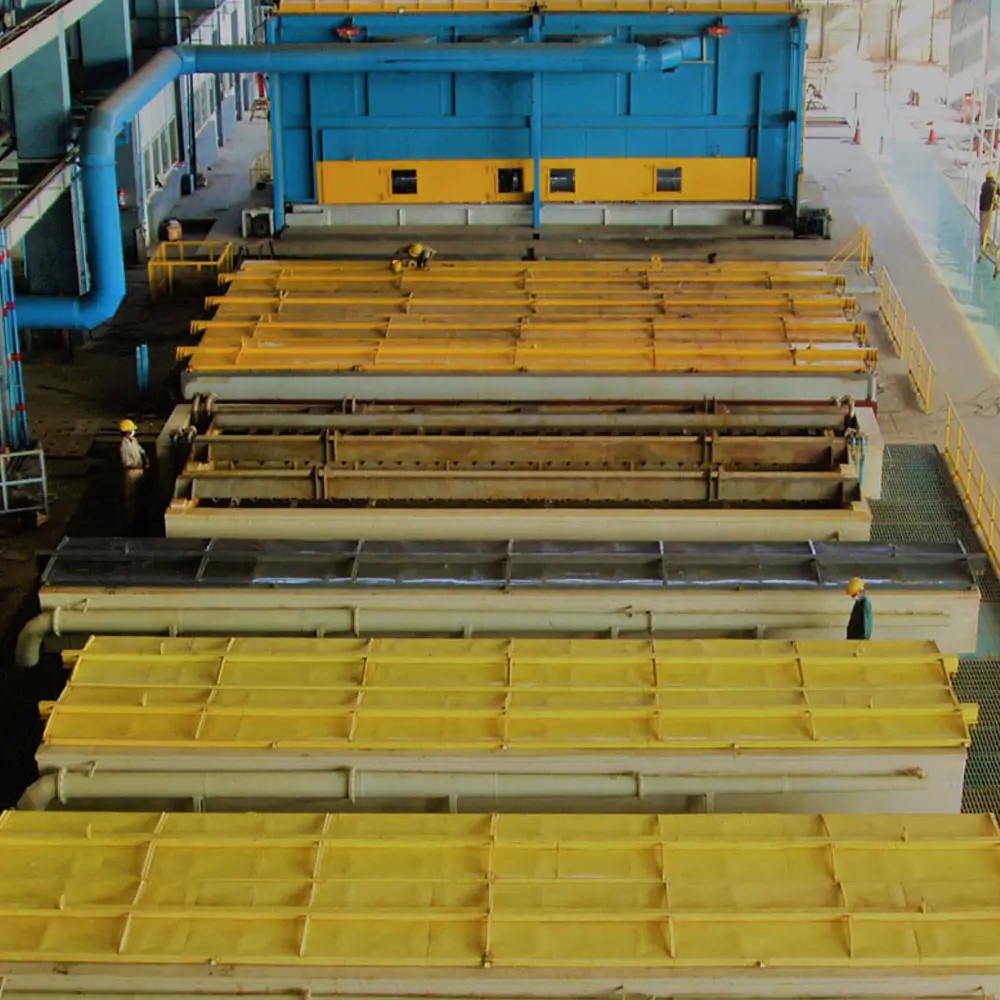
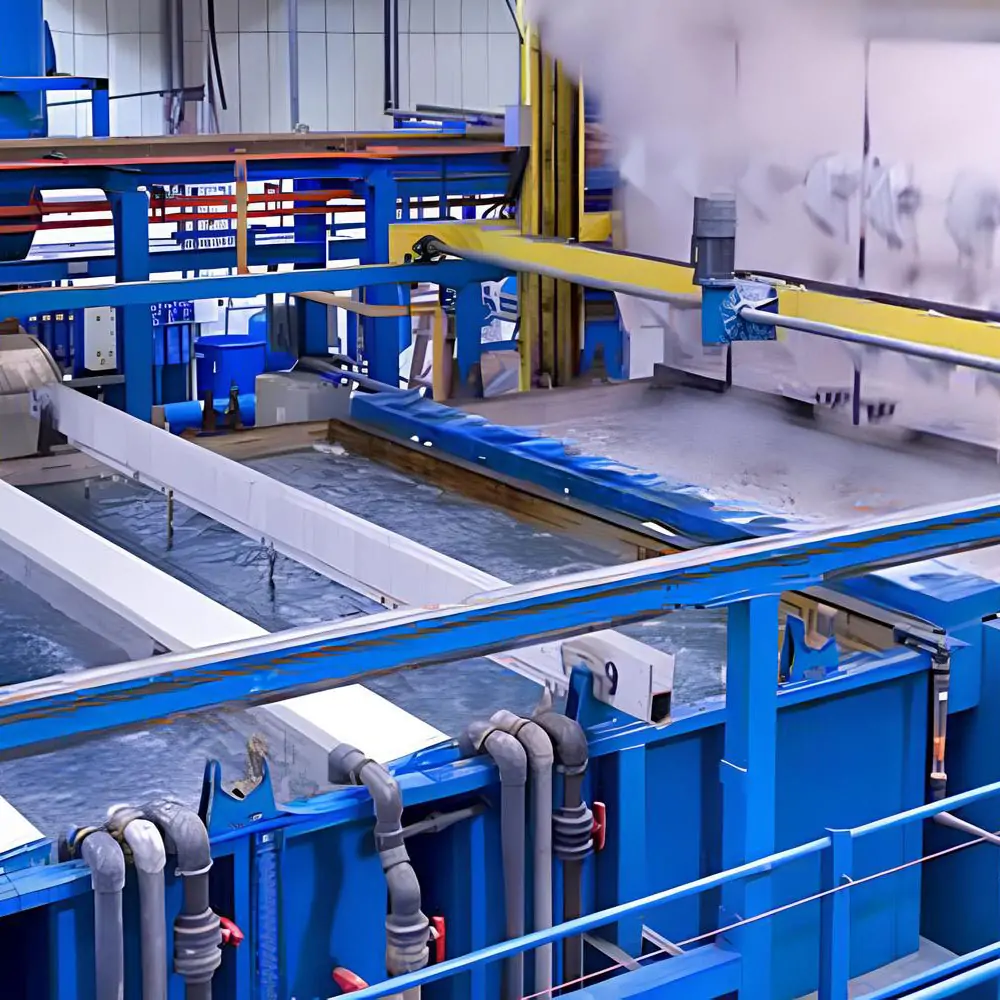
The whole system of tanks, rectifiers, heating and cooling equipment, ventilation systems and material handling equipment required to make this process possible on an industrial scale is called an anodizing plant. The plant usually contains the degreasing, etching, desmutting, anodizing, coloring and sealing and rinsing sections. The control of each stage is required to be very precise in terms of temperature, chemical concentration and current density. If any of these stages are not optimally designed or executed, the coating may be uneven, the colors may fade or the corrosion resistance may be compromised in the entire batch of parts.
This is where the design quality offered by the experienced Anodizing Tank manufacturers in India comes into the picture. Precision engineering and materials are key factors that can impact the performance of a plant from day to day.
How Anodizing Plants Improve Production Efficiency
1. Consistent Quality Reduces Rework and Rejection
Rework is one of the largest hidden costs of any metal finishing process. This results in batches being produced with varying thicknesses of coating when the tanks are not specifically designed to produce a uniform chemical concentration and temperature. This only leaves the operators with the choice of reprocessing the components or scrapping them altogether, which is a worse scenario. A well-designed anodizing plant has tight process control, resulting in less of a production flow disruption and less rejected batches. This uniformity over time equals substantial client turnaround and cost savings.
2. Automation Reduces Manual Dependency
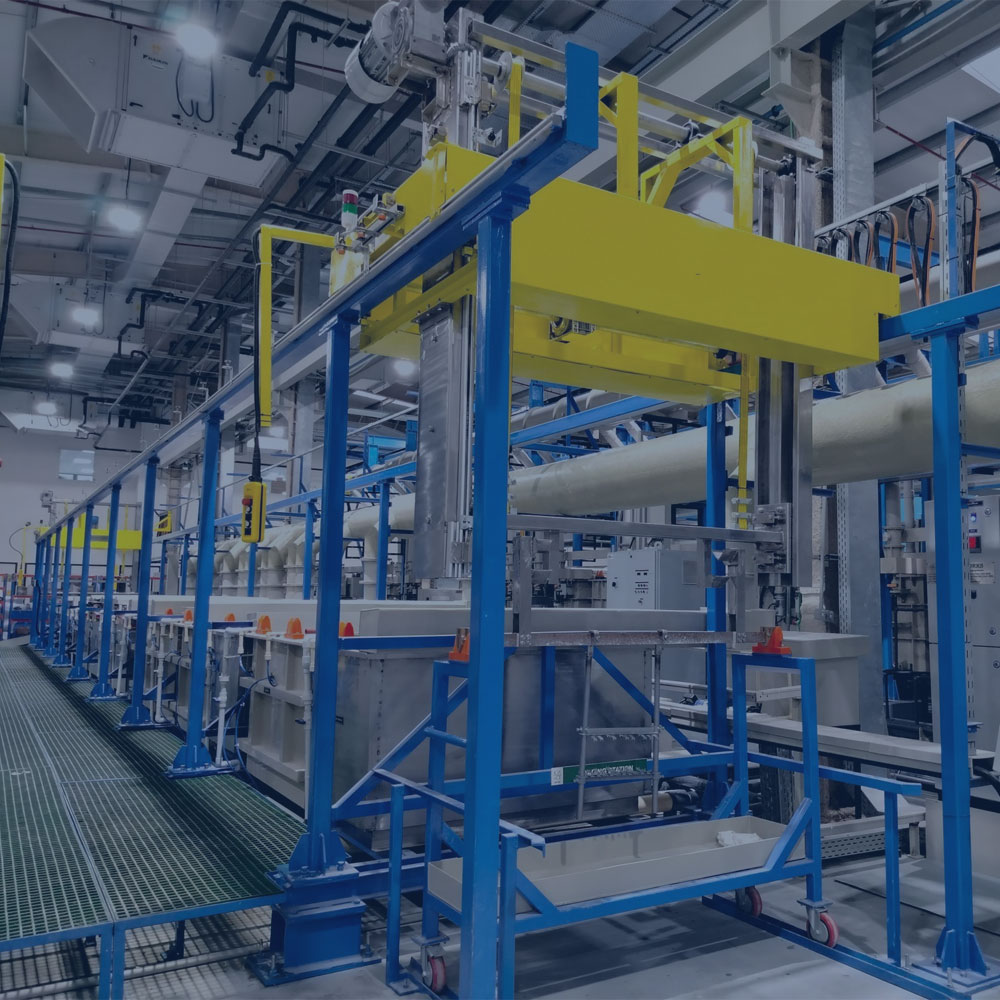
Even modern anodizing plants are offered in three different configurations: manual, semi-automatic and fully automatic. Tasks such as dipping, timing and transferring components between tanks are done without relying on manual processes, which are reduced through automation. This not only accelerates the production process, but also eliminates the risk of human error, which can lead to uneven finishes or contamination between production stages. The industries that change from manual to automatic or semi-automatic anodizing plants generally experience a dramatic increase in productivity per day without the need for additional manpower.
3. Better Tank Design Improves Chemical Efficiency
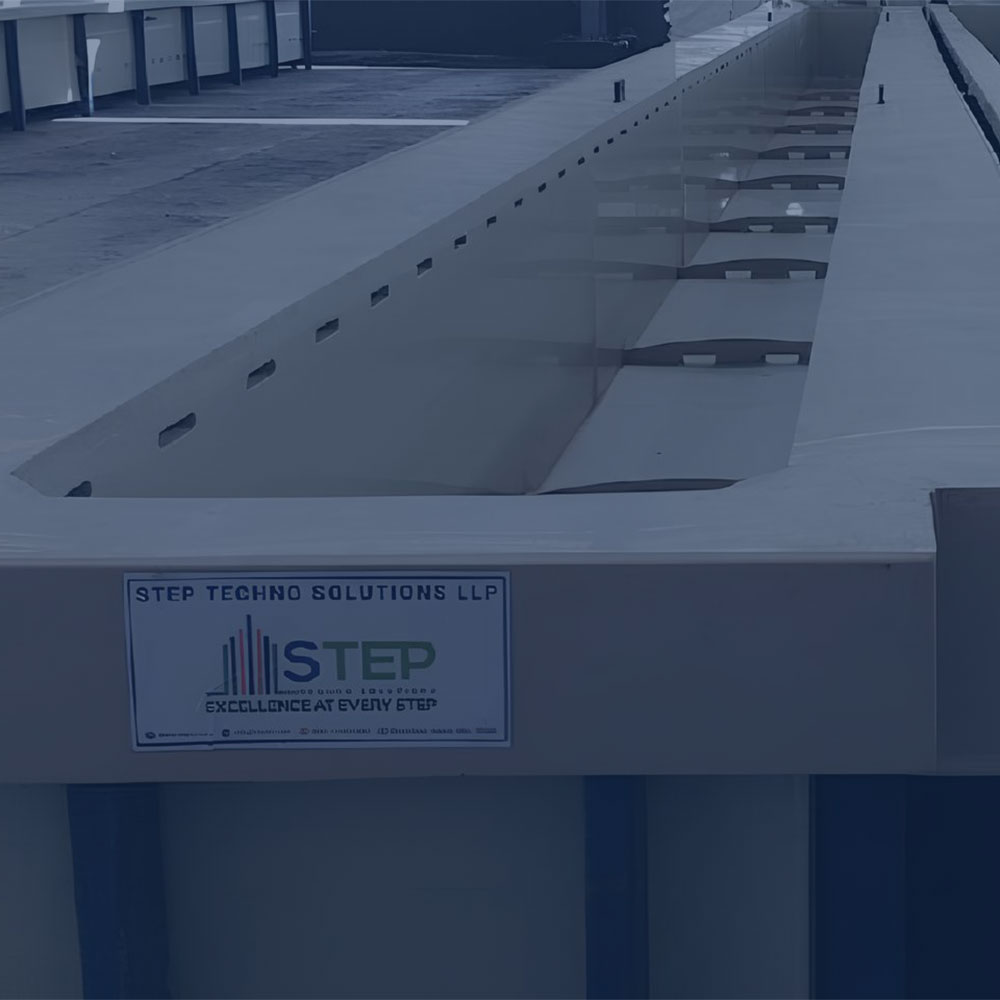
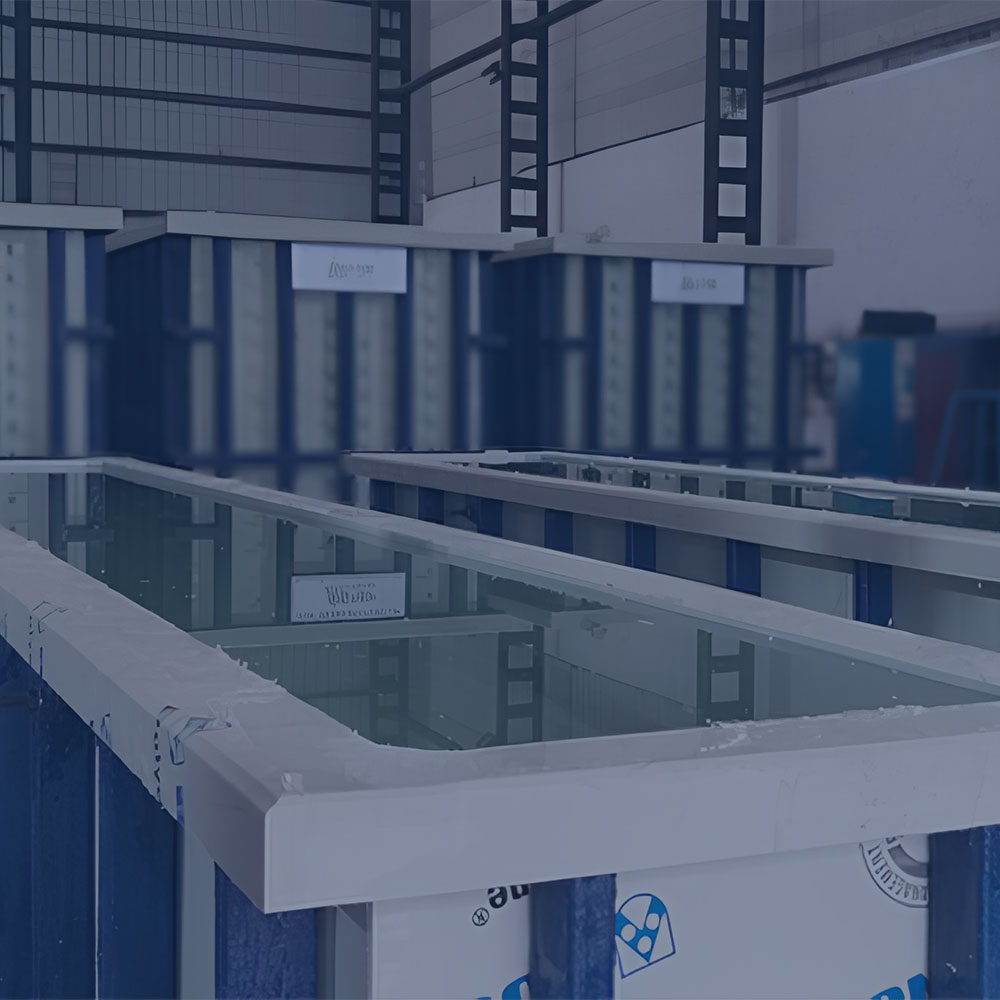
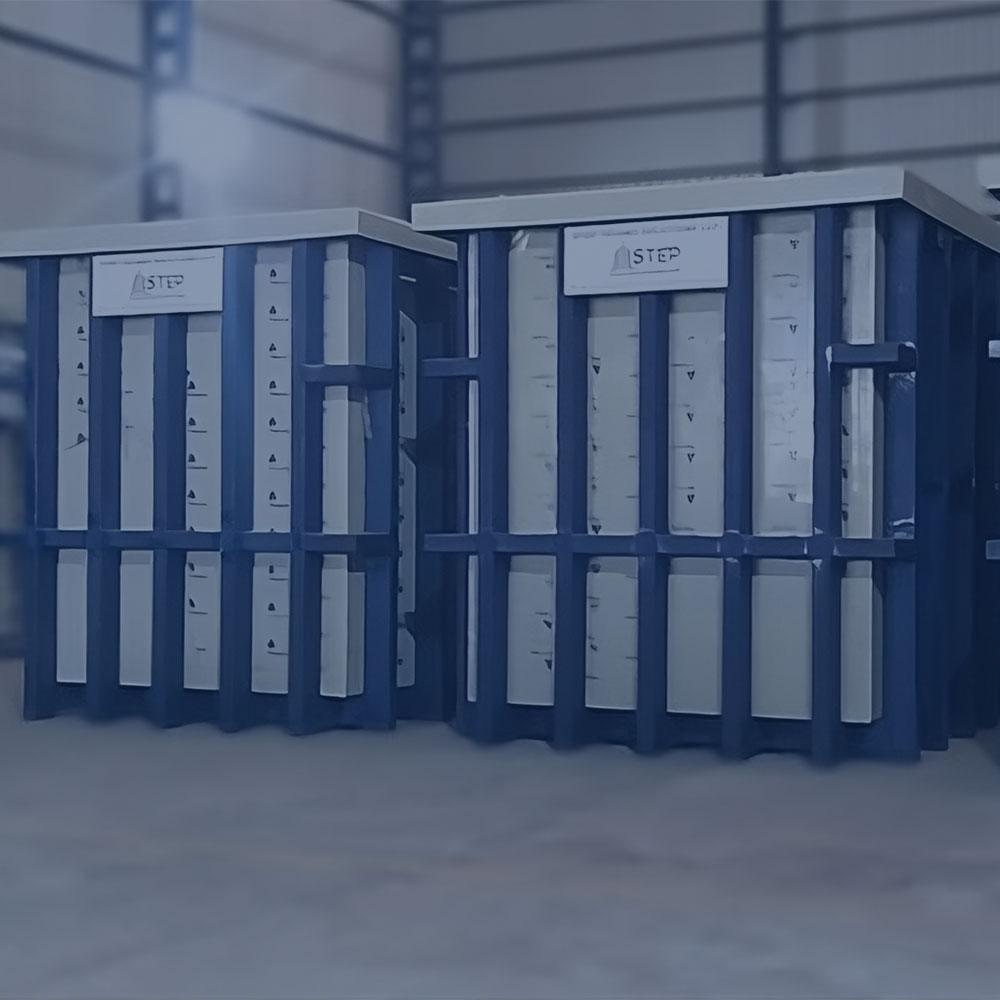
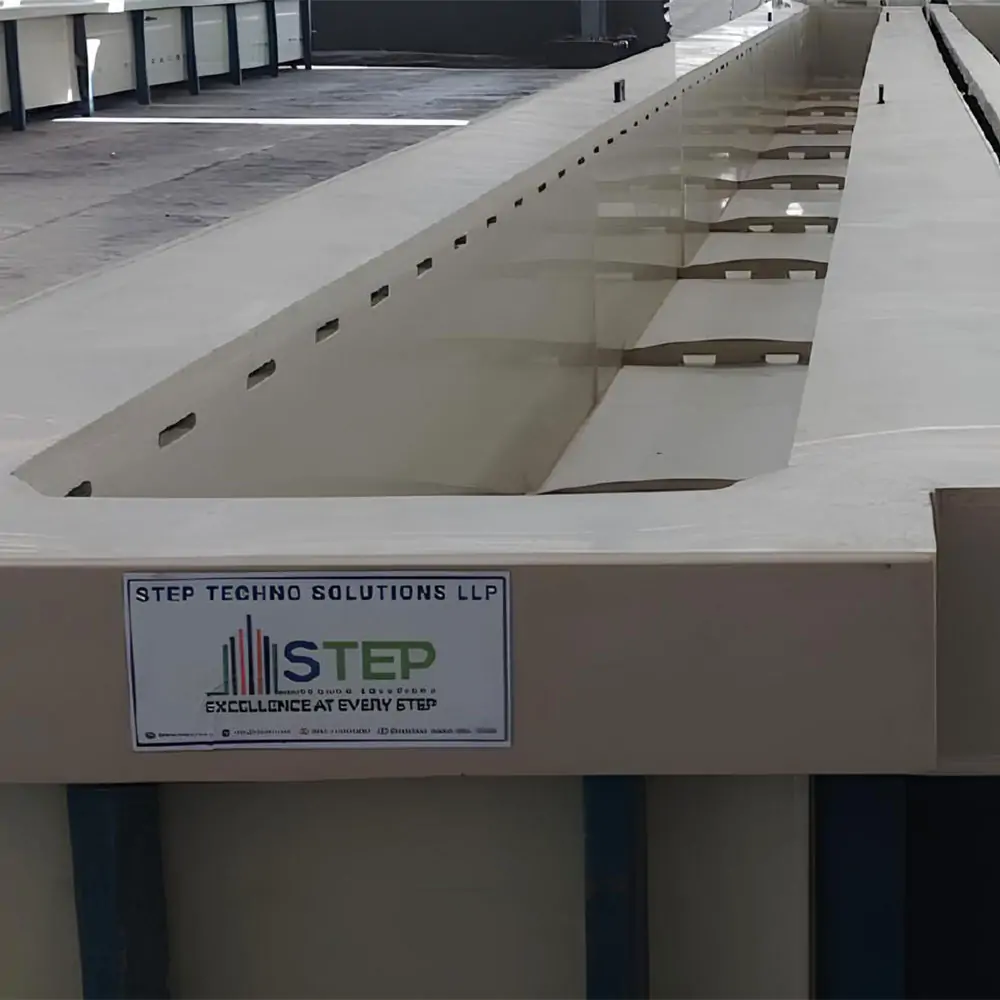
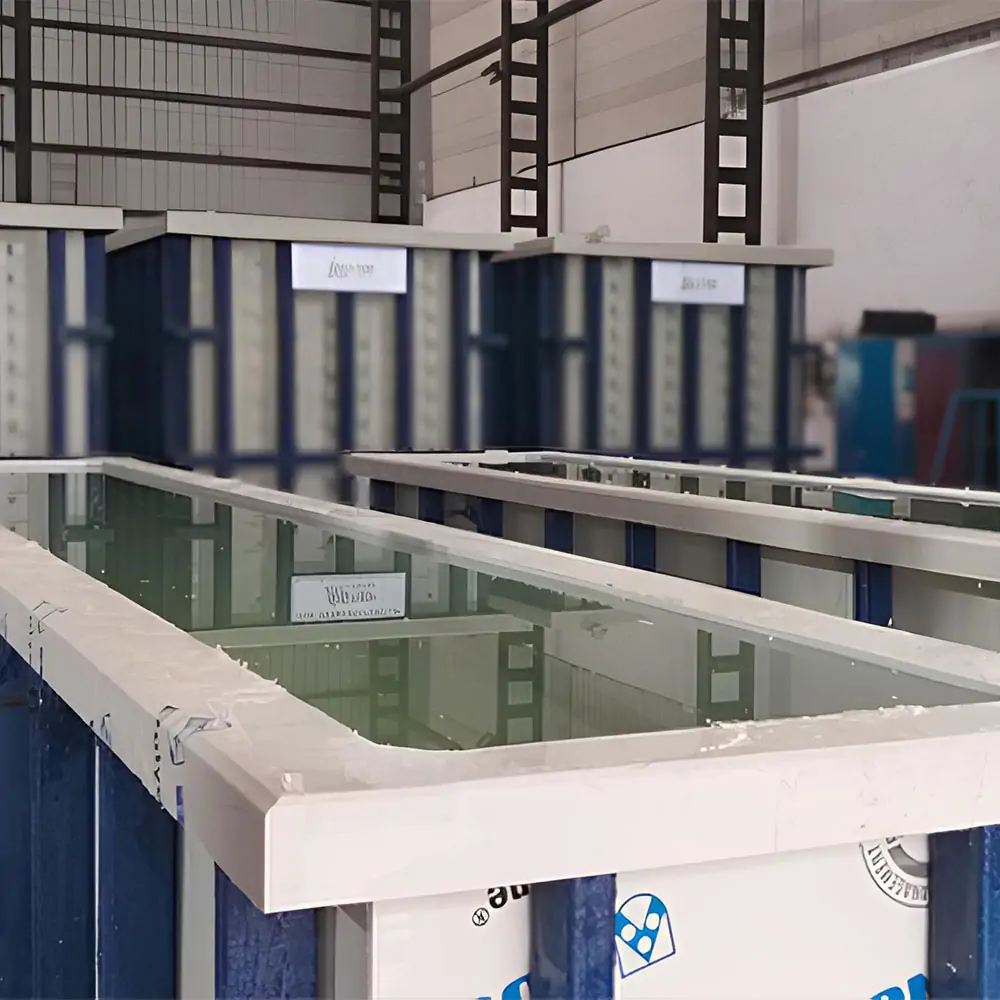
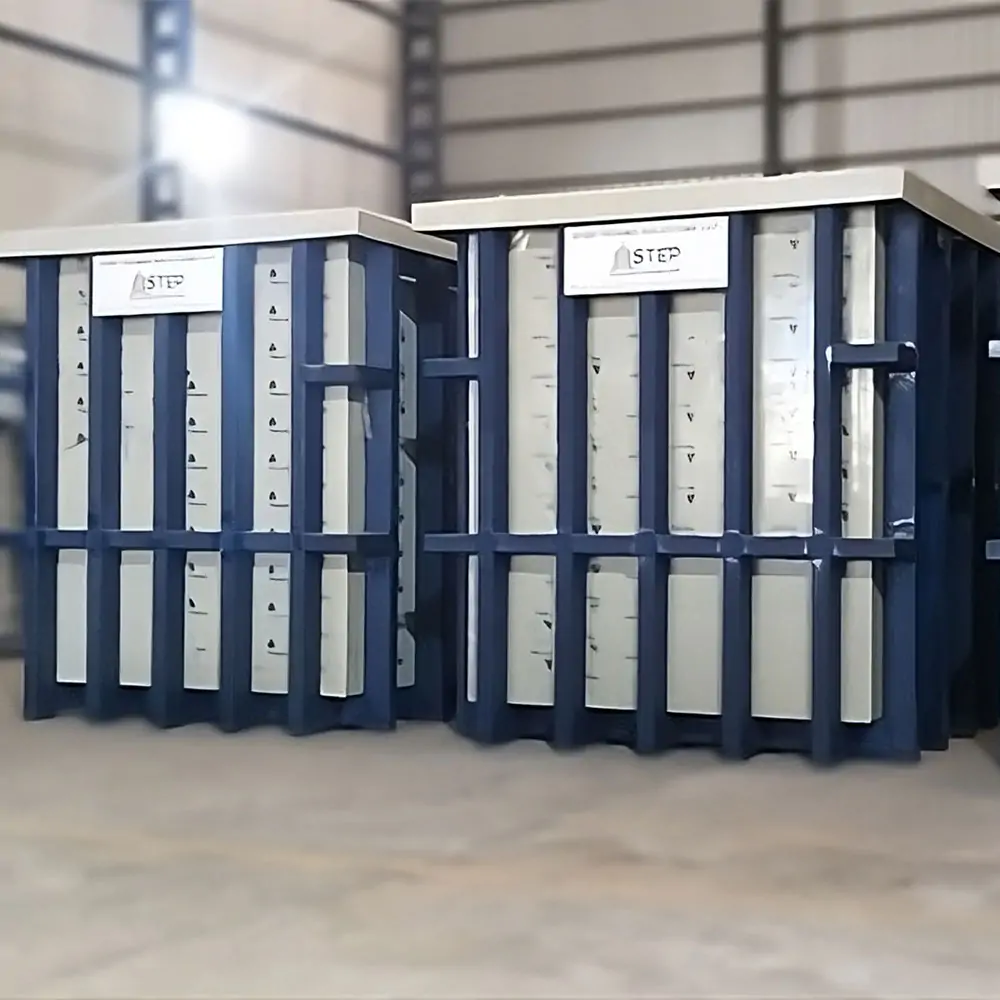
Process tanks used in an anodizing plant can determine the chemical usage. If tanks are poorly insulated or constructed of poor material, they lose heat rapidly and heaters must run for longer periods and/or more frequently to maintain the temperature. They also have the potential of reacting with process chemicals over time, causing contamination and decreasing chemical bath life. Reliable Anodising Tank Manufacturers in India use corrosion-resistant materials and appropriate insulation techniques to help sustain stable bath conditions for extended periods of time. This leads to a lower frequency of change out of chemicals and hence a lower capital and running cost for the plant.
4. Faster Cycle Times Through Optimized Layout
Production efficiency is not just about individual tanks, it’s about the design of the plant layout. Cycle times can be greatly reduced if there is a logical sequence to the plant, with minimal handling delays between each process stage. This smoother flow is influenced by overhead cranes, material handling systems and appropriate tank lines. By designing a plant from the ground up to produce faster, manufacturers can keep up with demand and not have to expand their floor space.
5. Reduced Downtime With Reliable Equipment
Downtime is the biggest problem in any manufacturing facility, and it’s the most expensive. Non-industrial rectifiers, heaters and pumps are more prone to failing and can cause delays in the production line while repairs are being made. Reputable components and suitable technical support make plants very few problem plants! This reliability helps to maintain production plans and shields the company from delayed deliveries.
6. Environmental Compliance Without Sacrificing Output
The modern anodizing facilities are also equipped with fume extraction and effluent treatment systems, allowing industries to conform to environmental regulations. A compliant plant at the outset will not be subject to regulatory shutdowns that can have a much greater impact on production schedules than any mechanical problem. Integrating compliance into the system from the initial start of the plant, instead of incorporating it later, ensures uninterrupted operations.
Industries That Benefit from Efficient Anodizing Plants
Anodizing is widely used across several industries, each with its own set of requirements:
- Automotive Industry: Anodized components resist road salt, moisture, and temperature changes while maintaining an appealing finish on trims and decorative parts.
- Aerospace Industry: Aircraft skins, structural parts, and hydraulic systems need lightweight yet corrosion-resistant coatings that can withstand extreme altitude and temperature variations.
- Electronics Industry: Metal enclosures and heat sinks rely on anodizing for both protection and improved heat dissipation.
- Architecture and Construction: Aluminium facades, window frames, and railings use anodizing for long-term weather resistance and aesthetic value.
Each of these industries demands a different balance of automation, tank capacity, and finish quality, which is why customization plays such an important role when selecting a plant supplier.
Why the Choice of Manufacturer Matters So Much
Although the process may appear to be the same on paper, not all anodizing plants perform the same. This is where most of the difference lies in engineering precision, material selection and after-sales technical support. When selecting reliable Anodizing Tank manufacturers in India, it is essential to consider the manufacturer’s experience in turnkey projects, their flexibility in options to automate the processes and their track record with various industries. The manufacturer who has an understanding of the chemistry of surface treatment, and not only the mechanical construction of the tank, is far more likely to provide a plant capable of performing efficiently for years rather than months.
STEP Techno Solutions LLP adopts this attitude when working on any anodizing plant project. The emphasis is not on a “one size fits all” approach, but on grasping the client’s production volume, finish needs, and available floor space prior to designing a system. This method has proven to be effective for improving daily production targets at manufacturing facilities in various industries, such as automotive, aerospace and building.
Key Factors to Consider Before Investing in an Anodizing Plant
Before finalizing a plant supplier, manufacturers should evaluate a few important factors:
- Automation Level Required: Manual plants suit smaller production volumes, while semi-automatic and automatic plants are better suited for higher throughput operations.
- Tank Material and Construction: The durability of process tanks directly affects chemical life and maintenance frequency.
- Customization Options: Different anodizing types, sealing methods, and color options should be available based on the end product requirements.
- Technical Support: Ongoing support after installation helps resolve operational issues quickly, minimizing downtime.
- Compliance Standards: The plant should meet environmental and safety regulations relevant to the region of operation.
Taking time to evaluate these points before selecting from the available Anodizing Tank manufacturers in India can save significant costs and operational headaches later.
The Long-Term Impact on Business Growth
An efficient anodizing plant is not just a piece of equipment; it becomes a competitive advantage. Faster cycle times mean shorter delivery windows for clients. Consistent quality builds trust and repeat business. Lower chemical and energy consumption improves profit margins on every batch produced. Over time, these small operational improvements add up to a meaningful difference in how a manufacturing business grows and competes in its industry.
STEP Techno Solutions LLP has built its reputation around this long-term thinking, designing anodizing plants that are meant to support growing production demands rather than just meeting today’s requirements. This forward-looking approach is what continues to bring industries back to STEP Techno Solutions LLP whenever they plan to expand or upgrade their surface treatment capabilities.
Why Choose Us
STEP Techno Solutions LLP brings years of hands-on experience in designing and manufacturing surface treatment plants that are built around real production challenges rather than generic templates. Every anodizing plant delivered by STEP Techno Solutions LLP is engineered with the right balance of automation, tank durability, and process control to help manufacturers reduce downtime, cut chemical wastage, and maintain consistent finish quality across every batch. From manual setups for smaller operations to fully automatic lines for high-volume industries, the team works closely with each client to understand their floor space, budget, and finish requirements before proposing a solution. With a strong track record across automotive, aerospace, electronics, and architectural sectors, STEP Techno Solutions LLP continues to be a trusted name for businesses that want their surface treatment investment to deliver long-term value rather than short-term fixes.
Conclusion
Production efficiency in metal finishing depends heavily on the quality and design of the anodizing plant behind it. From consistent coating thickness to reduced downtime and lower chemical consumption, every stage of the process plays a role in shaping a manufacturer’s output and profitability. Choosing the right partner among the available options for surface treatment equipment can make the difference between a plant that constantly needs attention and one that runs smoothly for years. A thoughtful, well-engineered anodizing system is ultimately an investment in steady, reliable production growth for any industrial unit.
Want to know more about upgrading your production line with a high-performance anodizing plant? Call +91 98988 75757 or email info@steptsl.com.
Frequently Asked Questions
What are the benefits of an anodizing plant for production efficiency?
An anodizing plant improves production efficiency by ensuring consistent quality, reducing manual handling through automation, and optimizing the layout for faster cycle times. These advantages lead to lower rework rates, better chemical efficiency, and reduced downtime.
How do Anodizing Tank manufacturers in India contribute to production efficiency?
Anodizing Tank manufacturers in India design plants that enhance process control and operational flexibility. Their expertise in precise engineering and durable materials ensures reliable performance, which is crucial for maintaining high production levels.
What should businesses look for when choosing an anodizing plant supplier?
When selecting an anodizing plant supplier, businesses should consider factors such as the level of automation, material quality, customization options, technical support, and compliance with environmental regulations to ensure long-term efficiency and reliability.
Why is automation important in an anodizing plant?
Automation is important in an anodizing plant because it reduces dependency on manual processes, leading to faster production speeds and minimizing risks related to human error. This improvement enhances product consistency and overall efficiency in production.
What industries benefit most from efficient anodizing plants?
Industries such as automotive, aerospace, electronics, and construction benefit significantly from efficient anodizing plants. These sectors rely on anodizing for enhanced product performance, durability, and aesthetic appeal, making efficient production critical for their operations.