Key Takeaways
-
Hot dip galvanizing provides superior corrosion protection
The zinc coating forms a strong metallurgical bond with steel, offering long-lasting protection even in harsh environmental conditions. -
The process ensures complete and durable surface coverage
Through stages like cleaning, fluxing, galvanizing, and cooling, the steel receives a uniform coating that protects all surfaces, including edges and corners. -
Modern galvanizing plants improve efficiency and quality
Advanced systems with automation, temperature control, and monitoring ensure consistent coating thickness, better productivity, and high-quality output. -
It is a cost-effective long-term solution
Although initial setup costs may be higher, reduced maintenance, longer service life, and fewer replacements make galvanizing economically beneficial. -
Widely used across multiple industries
Galvanizing factories provide long-lasting, corrosion-resistant steel components for industries like construction, automotive, electricity, agricultural, and oil and gas.
Hot dip galvanizing is one of the most reliable and widely adopted methods for protecting steel from corrosion. In industrial environments where durability, strength, and longevity are critical, galvanizing plays a key role. A Hot Dip Galvanizing Plant is a specialized facility designed to coat steel and iron products with a layer of zinc, forming a protective barrier against environmental damage.
Understanding the Hot Dip Galvanizing Plant
A Hot Dip Galvanizing Plant is designed to carry out a metallurgical process in which steel is submerged into molten zinc at high temperatures. The zinc reacts with the surface of the steel, creating multiple layers of zinc-iron alloy, topped with pure zinc. This coating becomes an integral part of the steel rather than just a surface layer.
The demand for Hot Dip Galvanizing Plant manufacturers in india has grown significantly due to increasing industrialization and infrastructure development. Industries require long-lasting protection solutions that reduce maintenance costs while improving product life.
Step-by-Step Hot Dip Galvanizing Process
1. Surface Preparation
The process begins with surface cleaning. Steel components are cleaned through degreasing, pickling, and rinsing. This step removes oil, dirt, rust, and mill scale. Proper cleaning is critical because any contamination can affect the bonding of zinc.
2. Fluxing
The steel is cleaned and then submerged in a flux solution. This prevents oxidation before the galvanizing stage and improves the adhesion of molten zinc.
3. Galvanizing
The cleaned steel is immersed in a molten zinc bath, typically heated around 450°C. During this stage, a metallurgical reaction occurs, forming strong zinc-iron alloy layers.
4. Cooling and Inspection
Once removed from the zinc bath, the coated steel is cooled and inspected for coating thickness, uniformity, and finish. High-quality plants, like those designed by STEP® Techno Solutions LLP, maintain strict quality control measures.
Key Components of a Hot Dip Galvanizing Plant
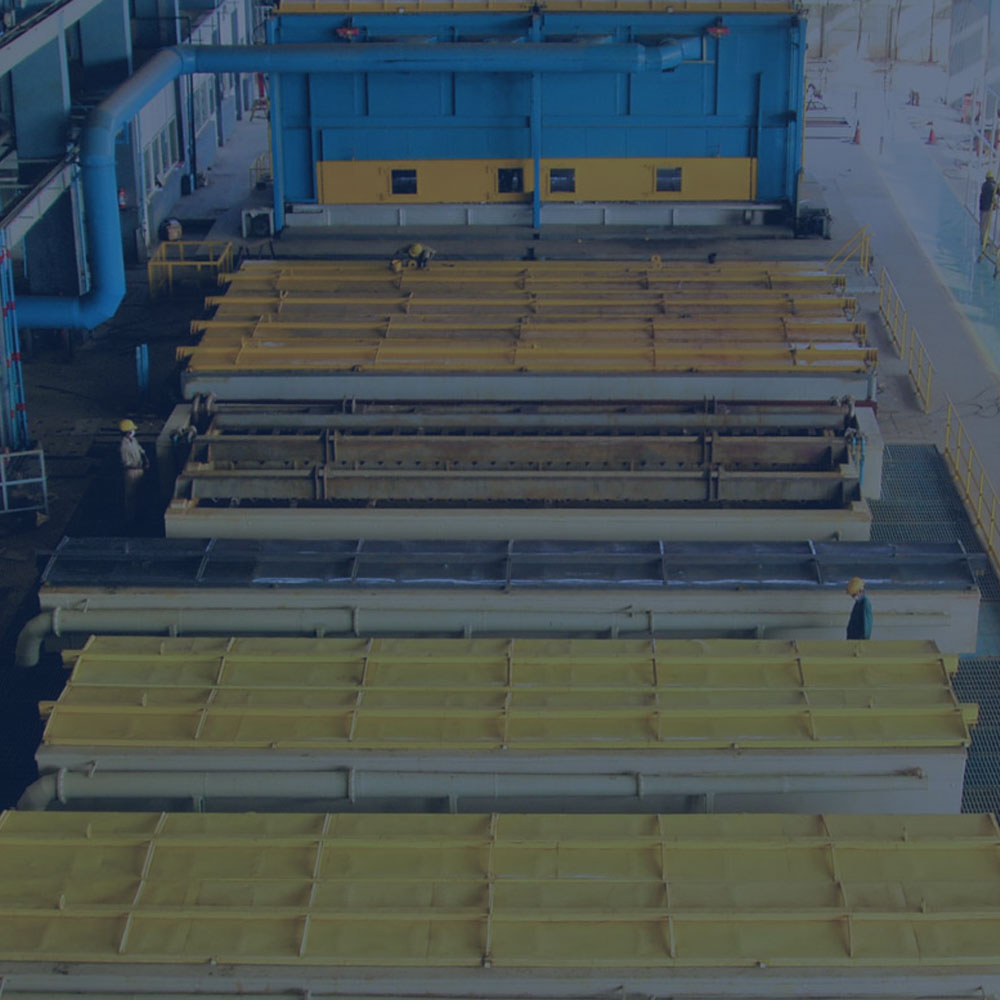
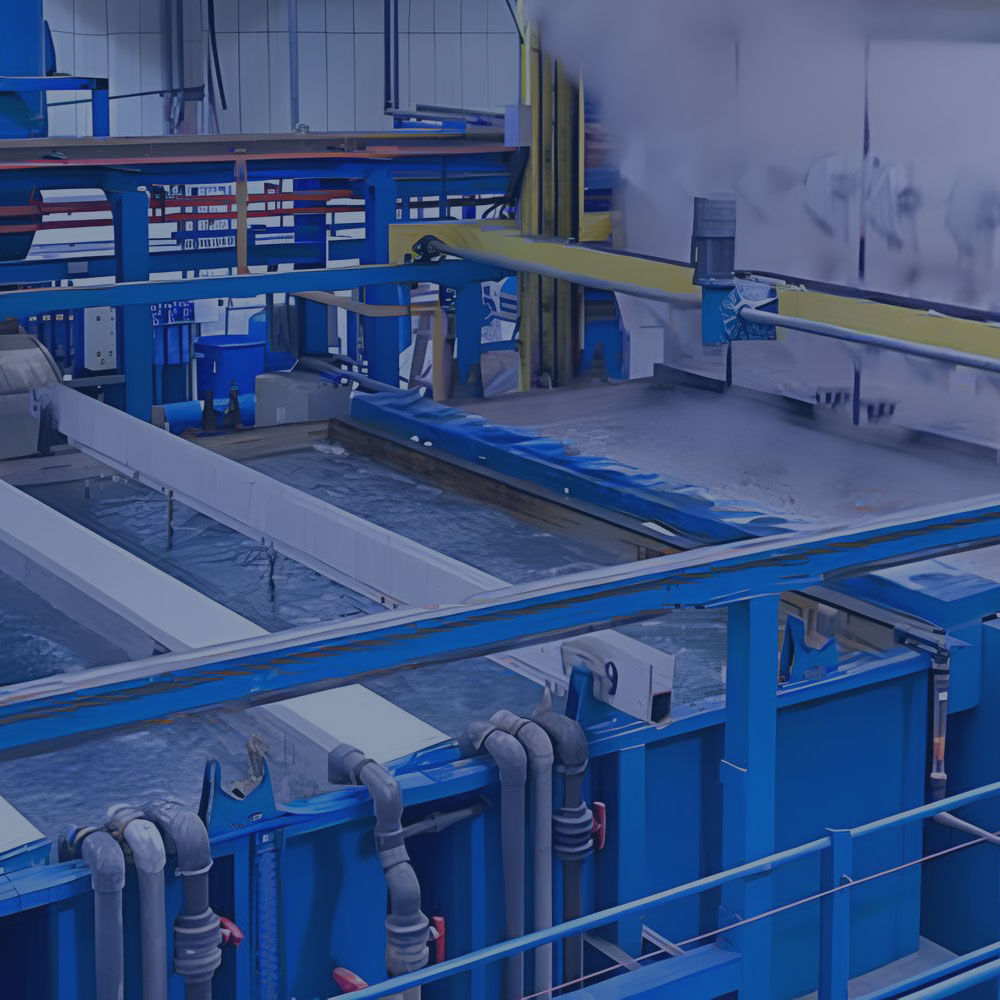
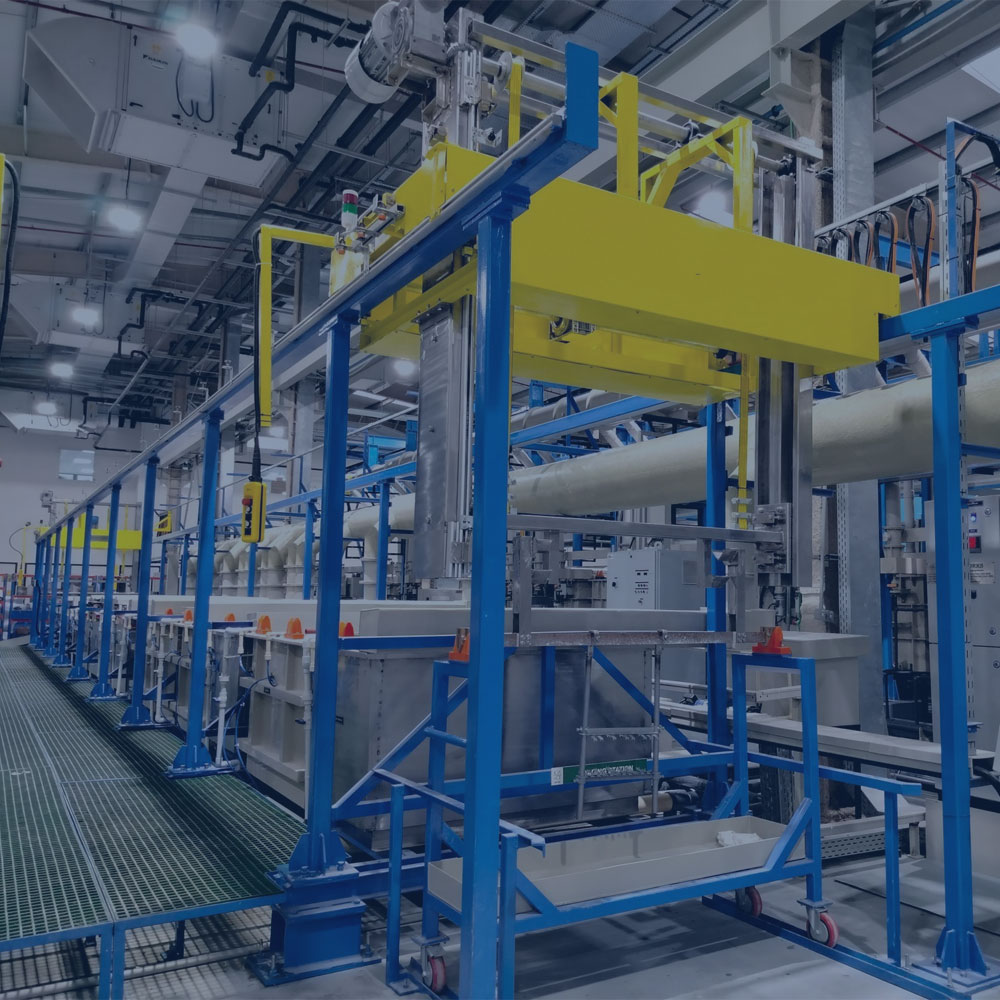
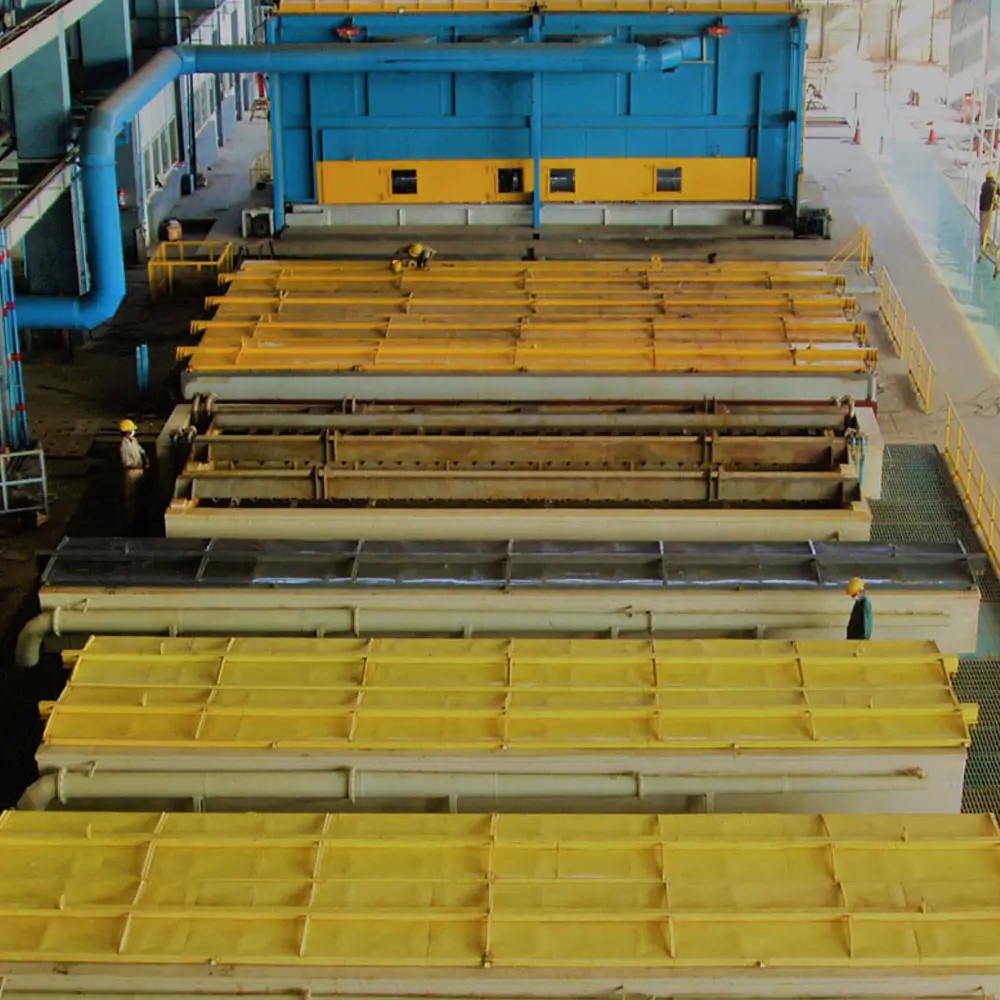
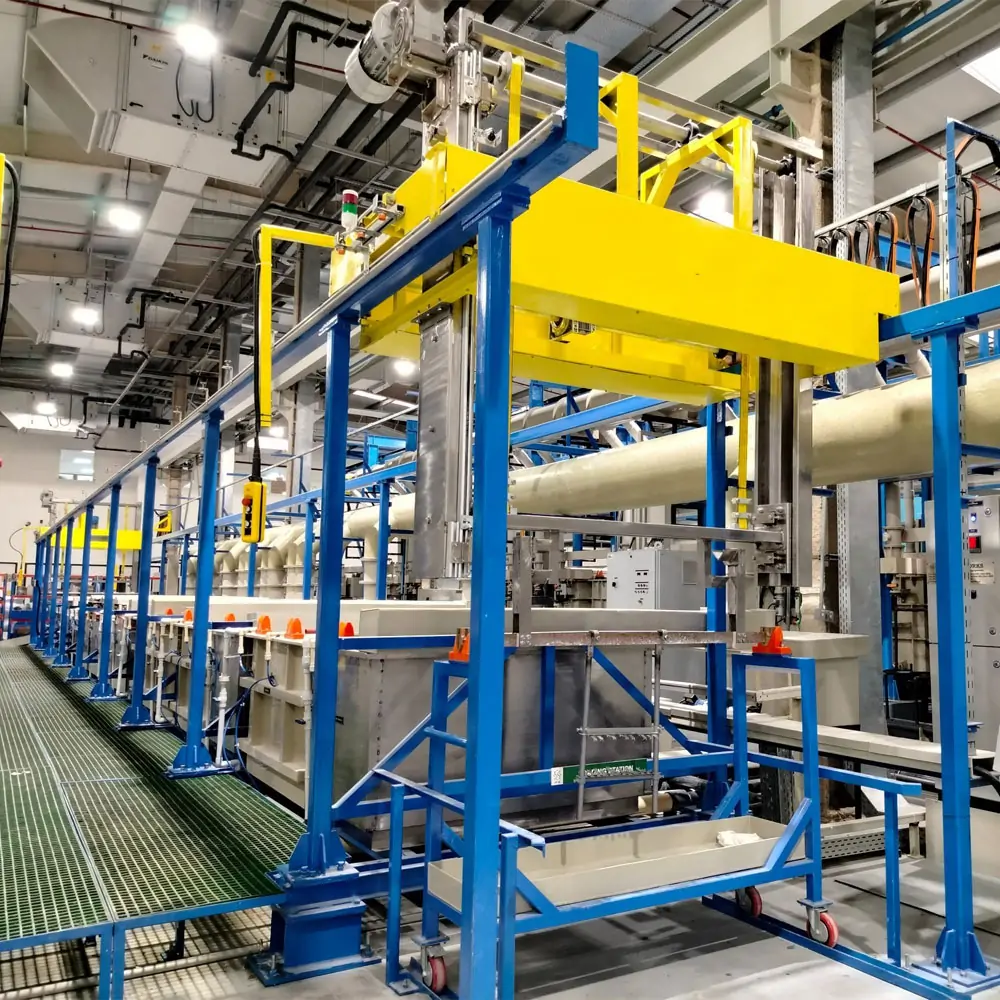
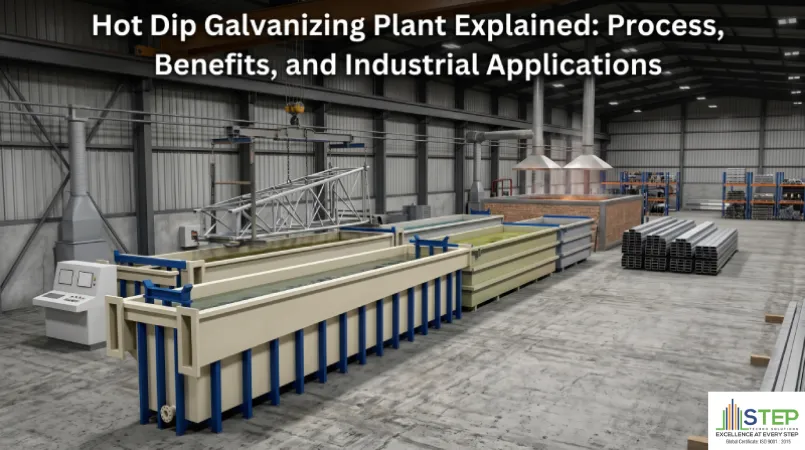
A well-designed plant includes several essential systems that work together efficiently:
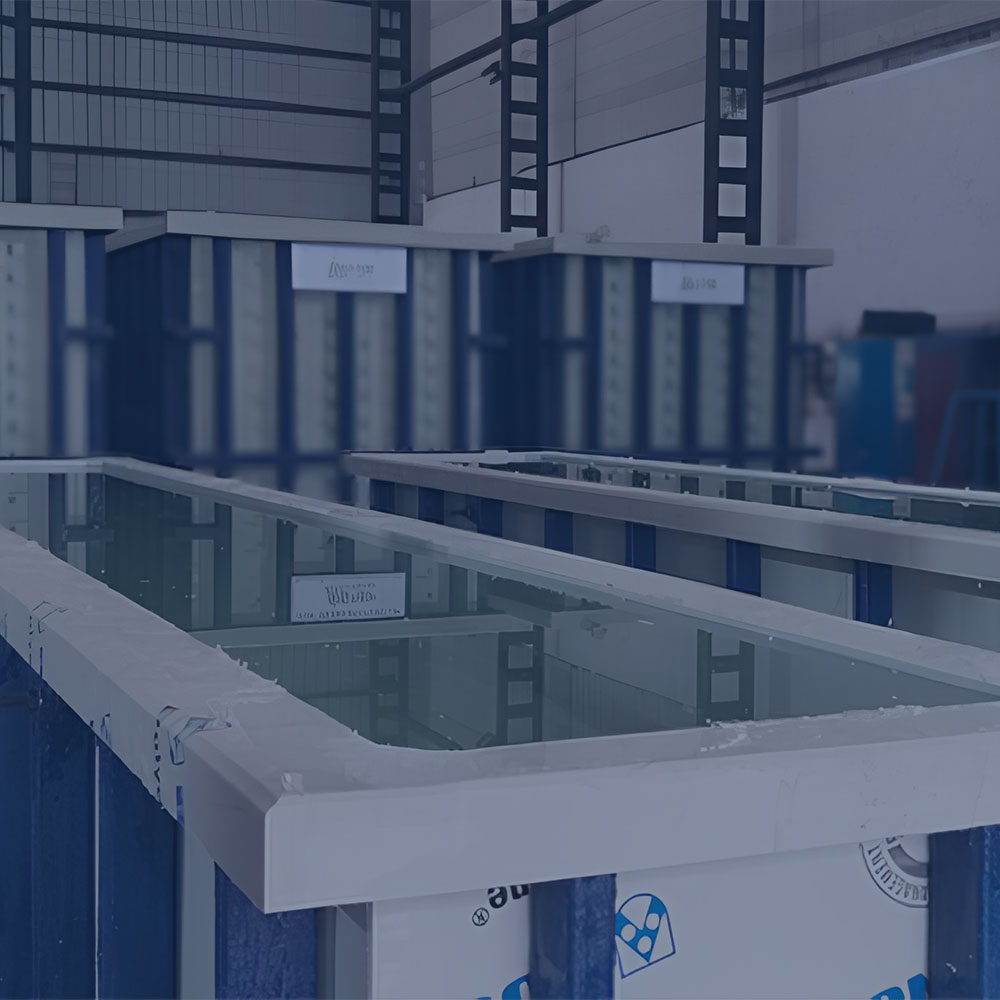
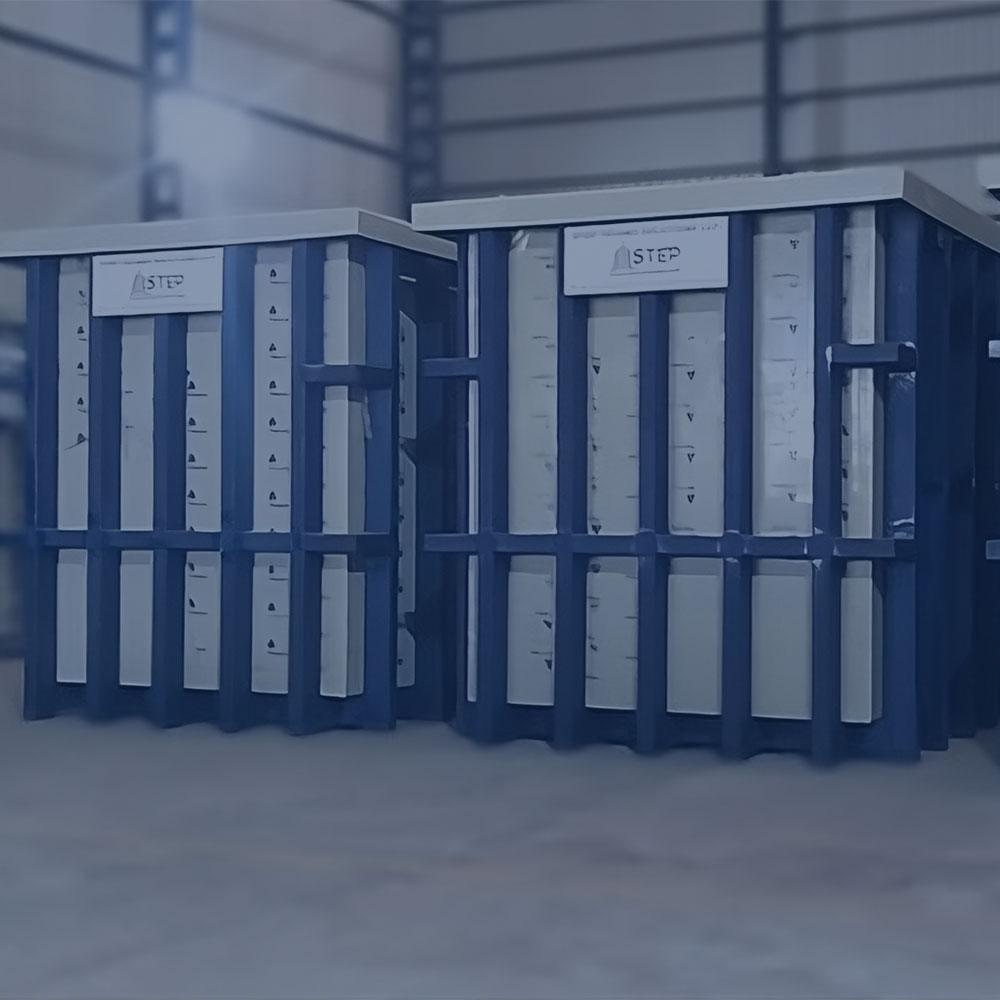
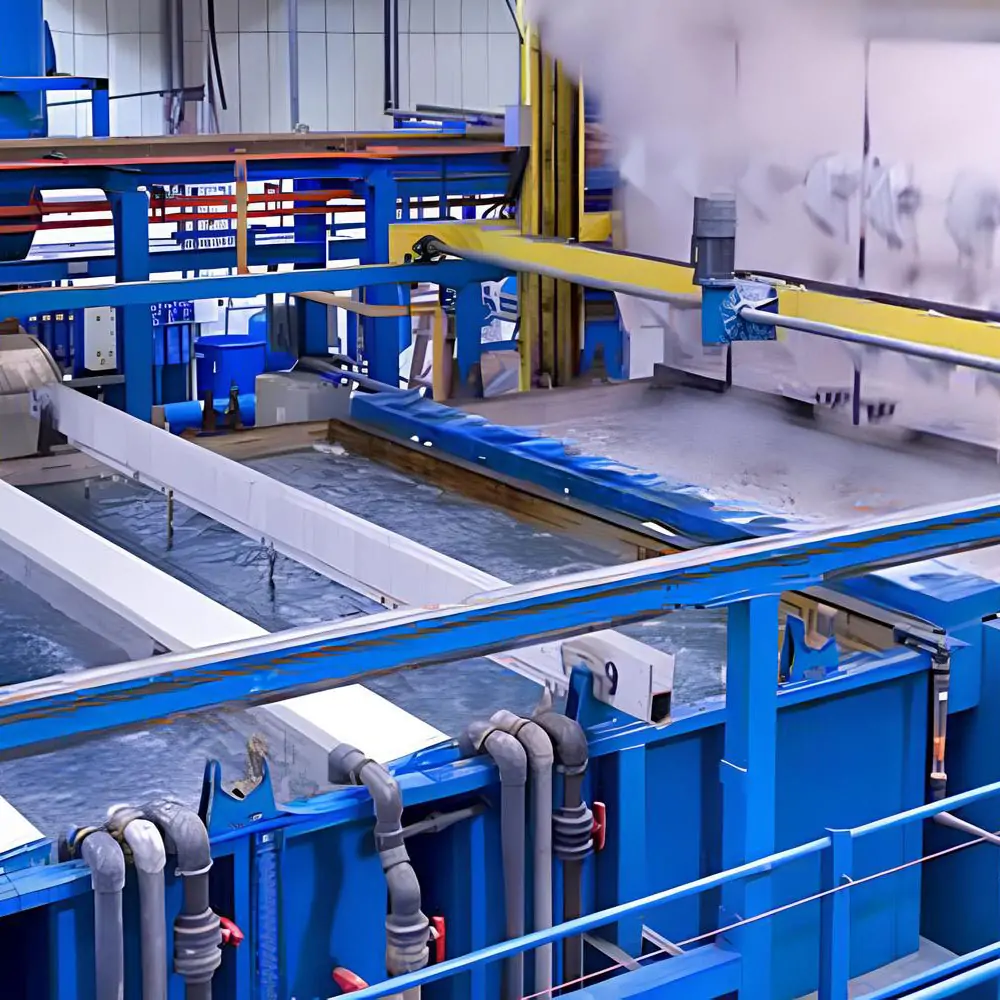
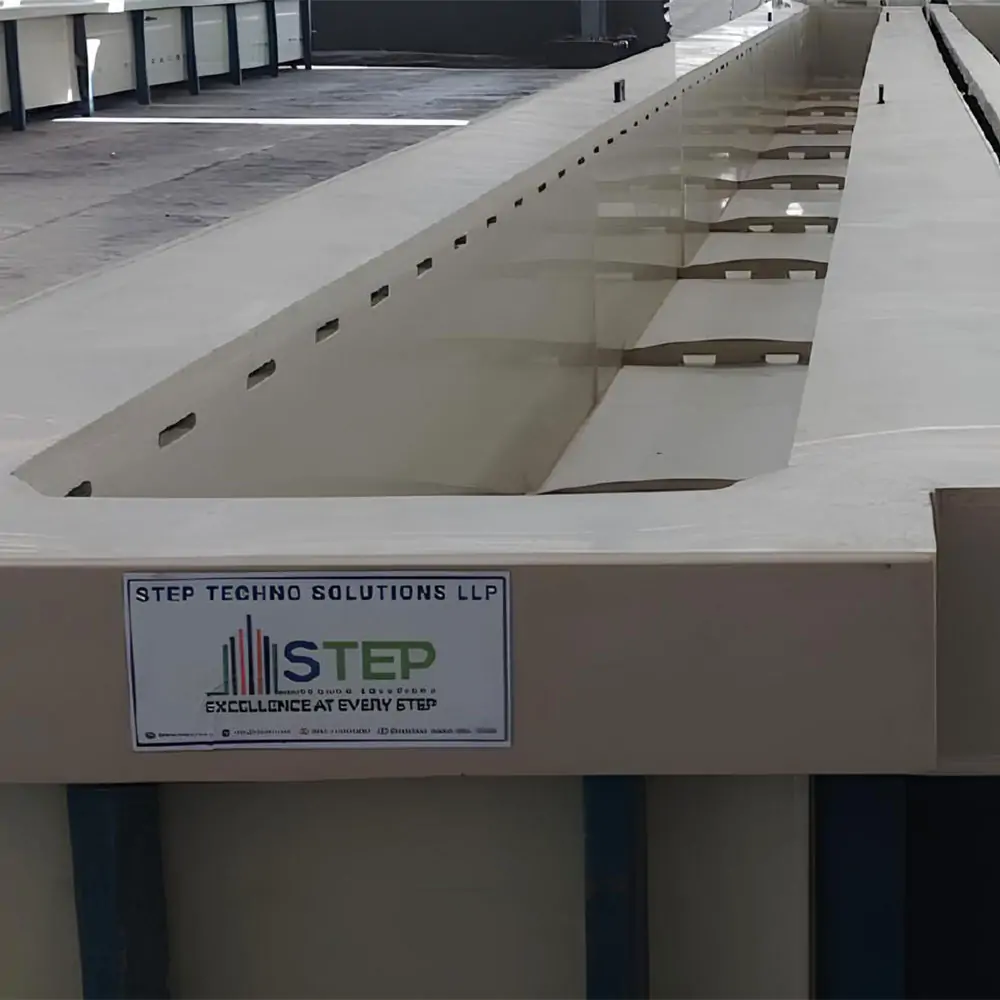
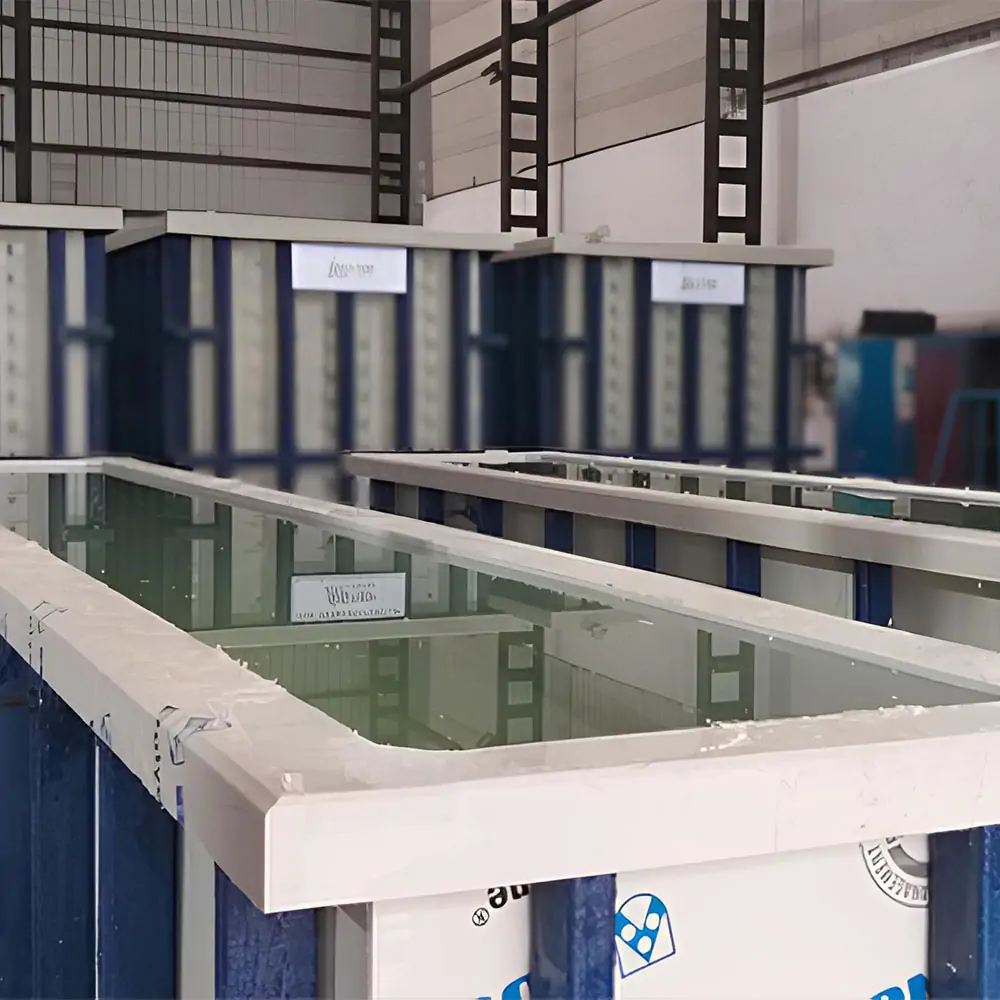
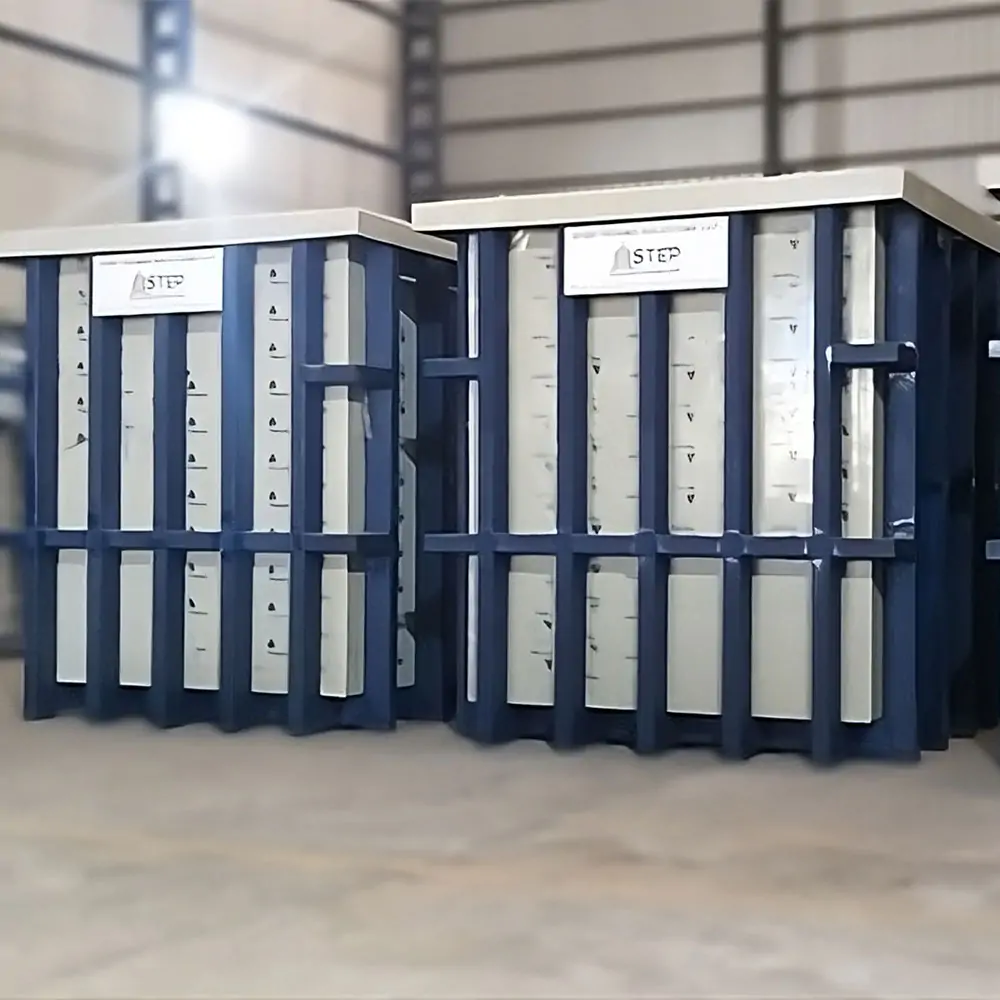
- Pre-treatment tanks
- Flux tanks
- Zinc kettle furnace
- Material handling system
- Fume extraction system
- Effluent treatment plant
Modern Hot Dip Galvanizing Plant manufacturers in india integrate automation and environmental controls to improve productivity and safety standards.
Benefits of Hot Dip Galvanizing
Superior Corrosion Protection
The zinc coating provides both barrier protection and sacrificial protection. The zinc protects the steel beneath even if the surface is scraped.
Long Service Life
Galvanized steel can last decades without significant maintenance, especially in harsh environments.
Cost Efficiency
Although the initial cost may appear higher, the long-term savings from reduced maintenance and replacement make it economical.
Complete Coverage
The dipping process coats all surfaces, including edges and corners, which are often difficult to protect using other methods.
Strong Bonding
The metallurgical bonding between zinc and steel makes the coating resistant to peeling or flaking.
The increasing reliance on Hot Dip Galvanizing Plant manufacturers in india reflects the demand for these long-term benefits across sectors.
Industrial Applications of Hot Dip Galvanizing
Hot dip galvanization is used across a wide range of industries due to its reliability and durability.
Infrastructure and Construction
Bridges, highways, railings, and structural steel benefit from galvanizing as they are constantly exposed to environmental conditions.
Power and Transmission
Transmission towers and electrical poles require corrosion resistance to maintain performance over long periods.
Automotive Industry
Many vehicle components are galvanized to improve durability and safety.
Agriculture
Fencing, silos, and irrigation systems are protected through galvanizing to withstand outdoor exposure.
Oil and Gas
Pipelines and offshore structures rely heavily on galvanizing for protection against corrosive environments.
Companies like STEP® Techno Solutions LLP design plants that cater to these diverse industrial applications.
Technological Advancements in Galvanizing Plants
Automation and digital monitoring have transformed galvanizing plants. Features such as temperature control systems, automated material handling, and process monitoring improve consistency and productivity.
STEP® Techno Solutions LLP integrates advanced engineering solutions to deliver high-performance galvanizing plants that meet modern industrial demands.
Why Choose Us
STEP® Techno Solutions LLP stands out in delivering high-quality galvanizing plant solutions with a strong focus on innovation, precision engineering, and customer requirements. The company combines technical expertise with modern technology to design plants that deliver consistent performance and long service life. With a deep understanding of industrial challenges, STEP® Techno Solutions LLP provides customized solutions that align with operational goals, helping businesses achieve efficiency, durability, and cost-effectiveness.
Conclusion
Hot dip galvanizing remains one of the most dependable methods for protecting steel from corrosion across industries. From infrastructure to energy and manufacturing, the demand for durable and cost-effective solutions continues to grow. A well-designed Hot Dip Galvanizing Plant not only improves product lifespan but also reduces maintenance efforts and operational costs. With advancements in technology and environmental practices, galvanizing plants have become more efficient and sustainable. Partnering with experienced providers like STEP® Techno Solutions LLP helps industries achieve reliable results and long-term value in their galvanizing operations.
Looking for advanced Hot Dip Galvanizing Plant solutions? Contact us at +91 98988 75757 or email info@steptsl.com
FAQs
What is a Hot Dip Galvanizing Plant?
A Hot Dip Galvanizing Plant is a facility where steel components are coated with molten zinc to protect them from corrosion.
How long does galvanized steel last?
Galvanized steel can last several decades depending on environmental conditions and coating thickness.
Why is galvanizing preferred over painting?
Galvanizing provides stronger bonding, complete coverage, and longer protection compared to paint.
Which industries use galvanizing plants?
Industries like construction, power, automotive, agriculture, and oil & gas use galvanizing extensively.
How to choose the right galvanizing plant manufacturer?
Look for experience, advanced technology, customization options, and strong after-sales support from reliable Hot Dip Galvanizing Plant manufacturers in india.