Key Takeaways
- Pickling plants are essential for maintaining clean metal surfaces in manufacturing processes.
- As a leading Pipe Pickling Plant Manufacturer in India, STEP Techno Solutions LLP ensures operational efficiency and high product quality.
- The pickling process involves multiple stages, including pre-cleaning, acid treatment, rinsing, and drying for optimal results.
- Investing in a high-quality pickling plant extends the life of coatings and improves adhesion for finished products.
- Modern pickling systems enhance chemical efficiency and reduce operational costs through optimized acid utilization.
In modern manufacturing industries, maintaining clean and contamination-free metal surfaces is essential for achieving high-quality production standards. Pickling plants play a crucial role in removing rust, scales, oxides, and other impurities from metal surfaces before further processing. Industries dealing with steel pipes, tubes, coils, and fabricated components rely heavily on pickling plants to improve product quality and operational efficiency.
As a trusted name in industrial surface treatment solutions, STEP Techno Solutions LLP offers advanced pickling plant systems designed to meet the evolving needs of industries across India and international markets. Being a reputed Pipe Pickling Plant Manufacturer in India, the company focuses on delivering efficient, reliable, and technologically advanced solutions for metal treatment applications.
What Is a Pickling Plant?
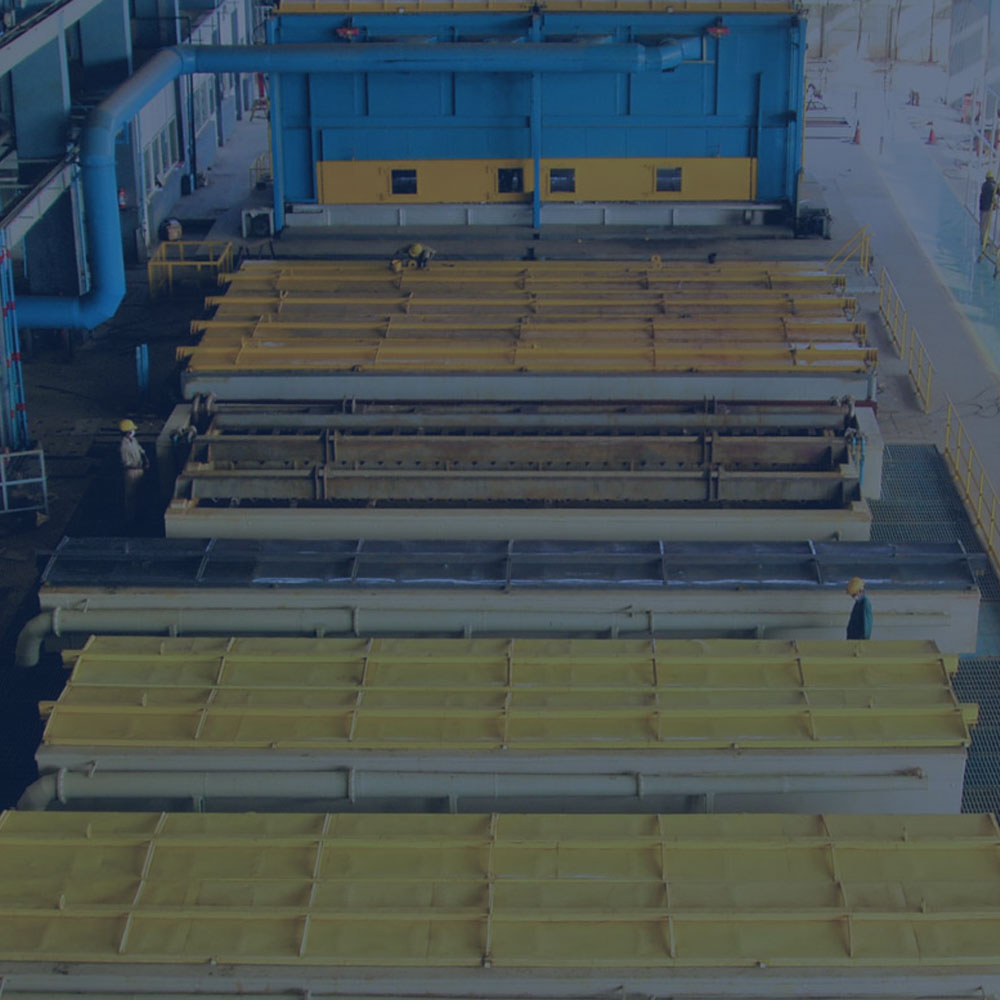
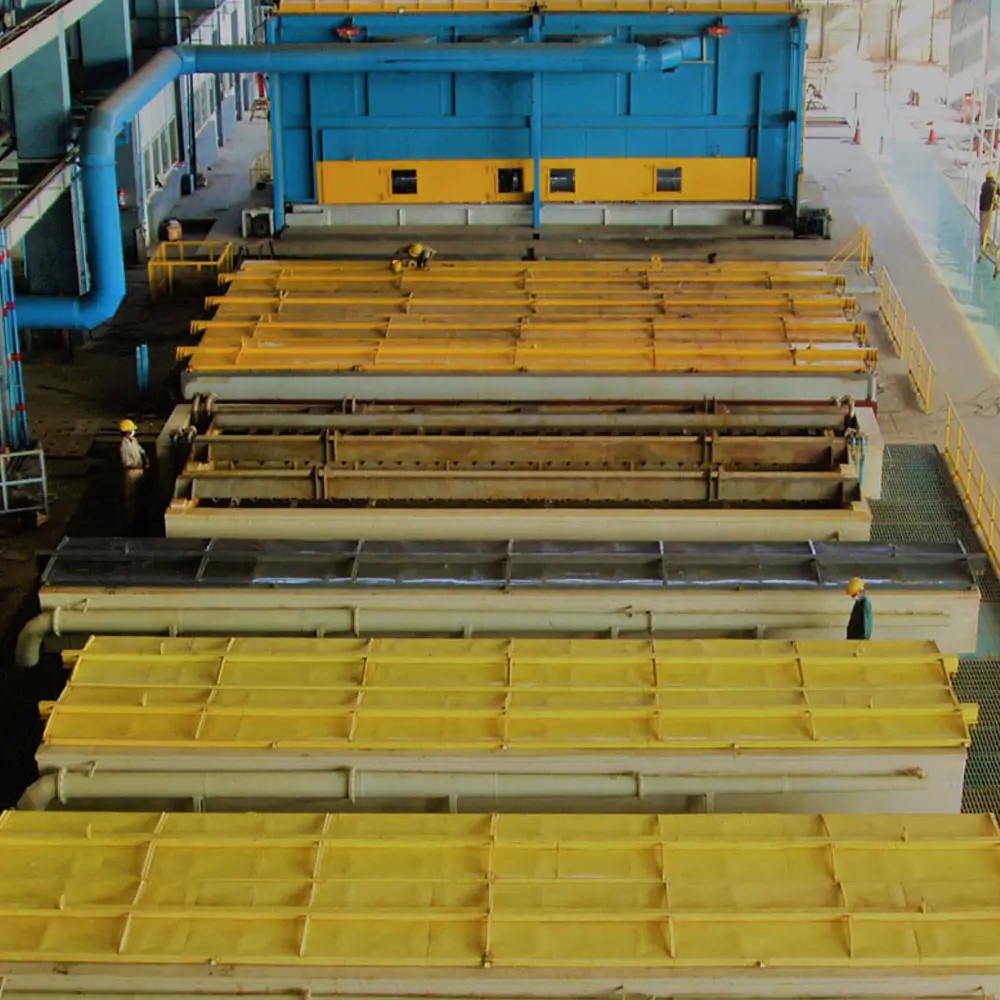
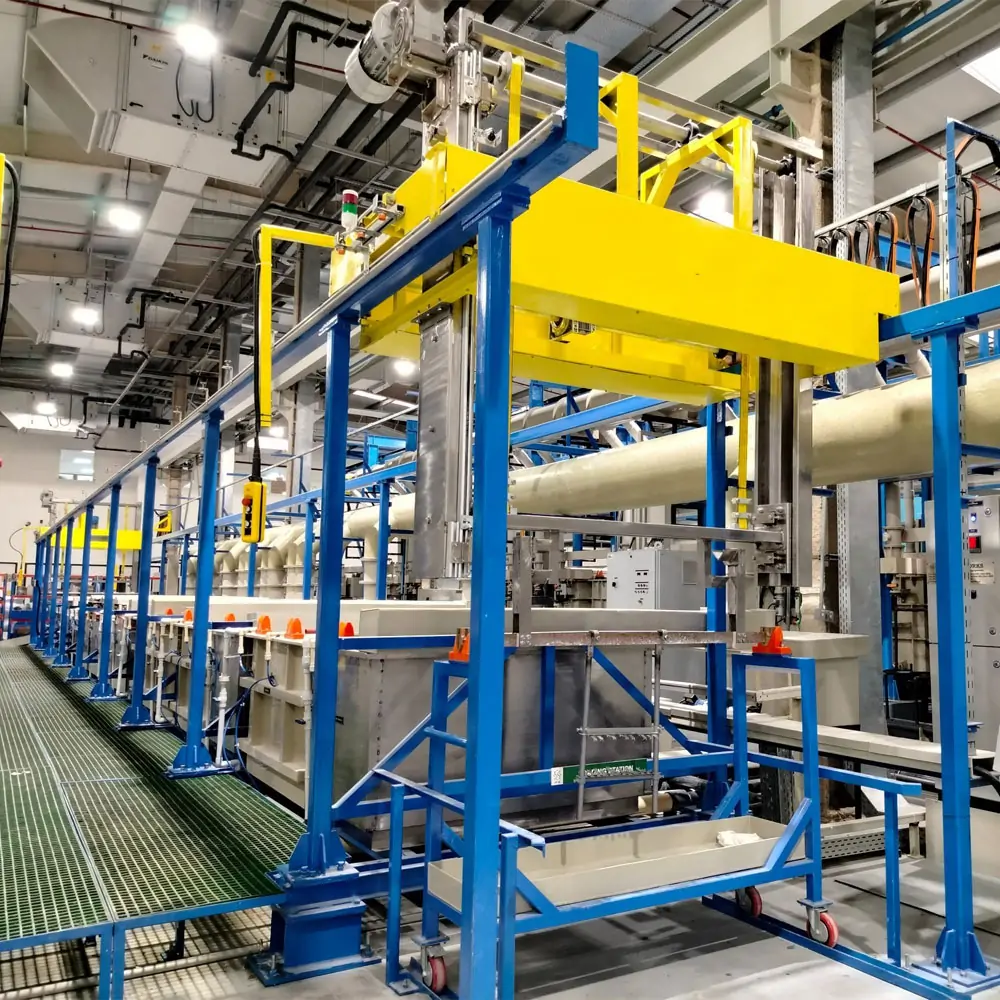
A pickling plant is an industrial facility or system used to chemically remove surface impurities from metals — primarily steel, iron, copper, and aluminum — using acid solutions. The term “pickling” in metallurgy refers to the chemical cleaning process that removes rust, scale, oxides, and other surface contaminants that accumulate during metal forming, rolling, welding, or heat treatment.
The acid solutions most commonly used in pickling are hydrochloric acid (HCl) and sulfuric acid (H₂SO₄). Each acid has specific advantages depending on the metal type, surface condition, and production speed required. Hydrochloric acid works faster and leaves a cleaner surface, while sulfuric acid is preferred in high-temperature applications. The choice of acid and the design of the pickling plant both depend on the specific application and industry requirement.
STEP Techno Solutions LLP, as a trusted Pipe Pickling Plant Manufacturer in India, designs pickling systems compatible with both HCl and H₂SO₄ processes, giving clients the flexibility to choose the right chemistry for their specific operations.
How Does the Pickling Process Work?
The pickling process follows a systematic sequence of steps, each critical to achieving a clean, reactive metal surface ready for the next stage of processing. Here is a breakdown of the typical pickling sequence:
Pre-Cleaning or Degreasing: Before the metal enters the acid bath, it passes through a pre-cleaning stage to remove oil, grease, and loose dirt. This step prevents contamination of the pickling bath and improves the effectiveness of the acid treatment.
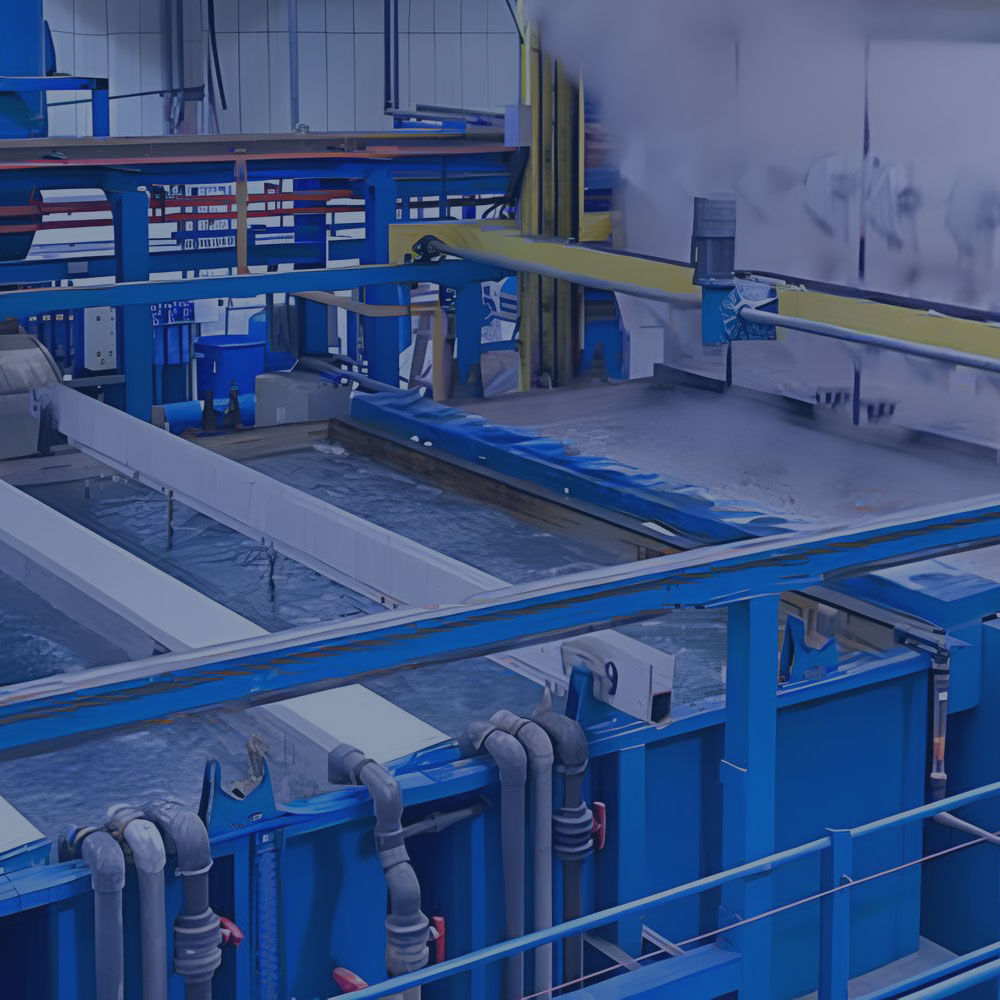
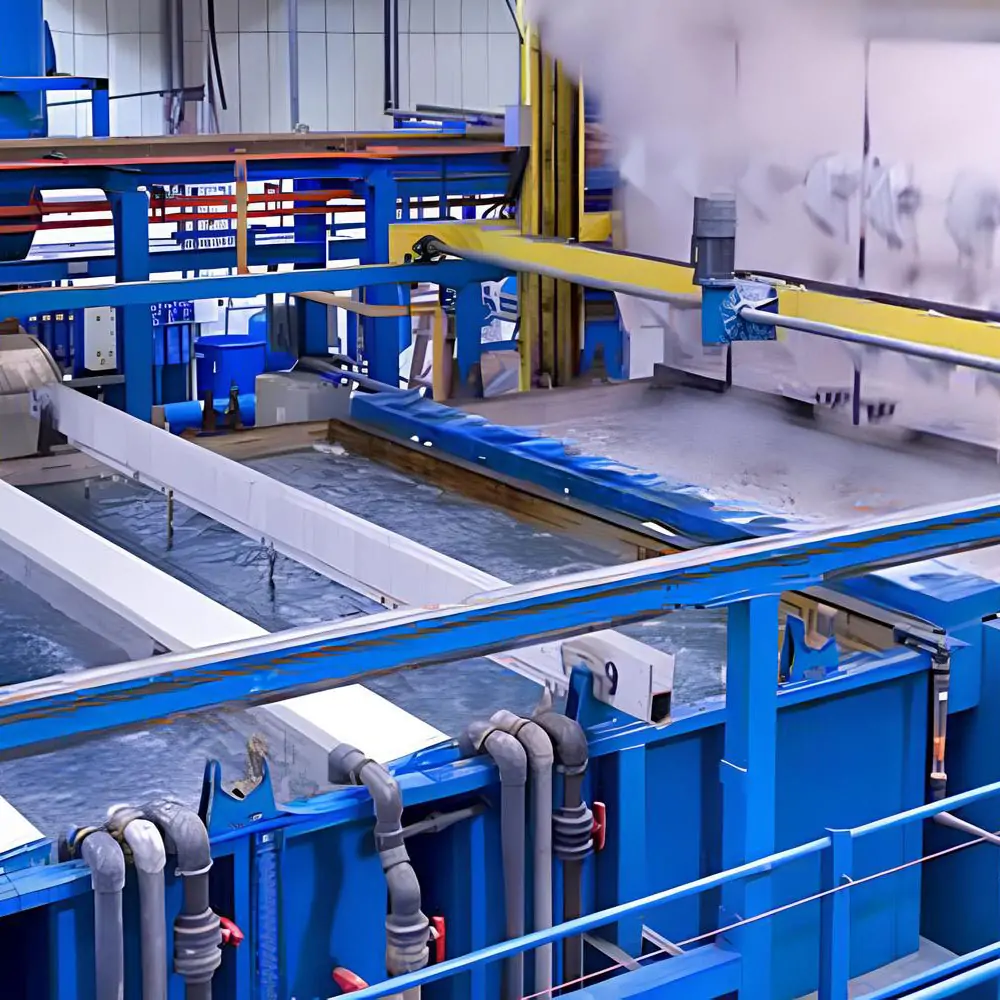
Acid Pickling Bath: The metal — whether it is a pipe, coil, sheet, or tube — is immersed in or passed through a tank containing the acid solution. The acid reacts with iron oxides and scale on the surface, dissolving them and leaving behind a clean metallic surface. The concentration of acid, temperature of the bath, and immersion time are carefully controlled to achieve the desired result without damaging the base metal.
Rinsing: After the acid treatment, the metal passes through a rinsing stage to remove all acid residues. Multiple rinsing stages are often used to achieve thorough neutralization. Incomplete rinsing can lead to corrosion and staining of the processed metal.
Neutralization and Passivation: In some processes, the metal undergoes a neutralizing wash to stop any residual acid activity. A passivation treatment may also be applied to form a thin protective oxide layer that prevents immediate re-rusting.
Drying: The cleaned and rinsed metal is dried before being moved to the next processing stage — whether that is galvanizing, electroplating, powder coating, or storage.
Each of these stages requires precisely engineered tanks, controlled chemical environments, and reliable material handling systems. STEP Techno Solutions LLP brings over 25 years of engineering experience to every pickling plant it designs and manufactures, making it one of the most reliable names among Pipe Pickling Plant Manufacturers in India.
Key Benefits of Investing in a High-Quality Pickling Plant
The decision to invest in a professionally engineered pickling plant goes far beyond operational necessity. Here is why industry leaders prioritize quality pickling systems:
Superior Surface Quality: A well-designed pickling system removes scale and oxides completely and uniformly, resulting in a reactive metal surface that bonds excellently with coatings, galvanizing baths, and other surface treatments. This directly improves the quality and longevity of the finished product.
Extended Coating Life: When the base metal is improperly cleaned, coatings fail prematurely due to poor adhesion. Proper pickling extends the lifespan of galvanized coatings, electroplated layers, and paint systems — reducing rework and warranty claims.
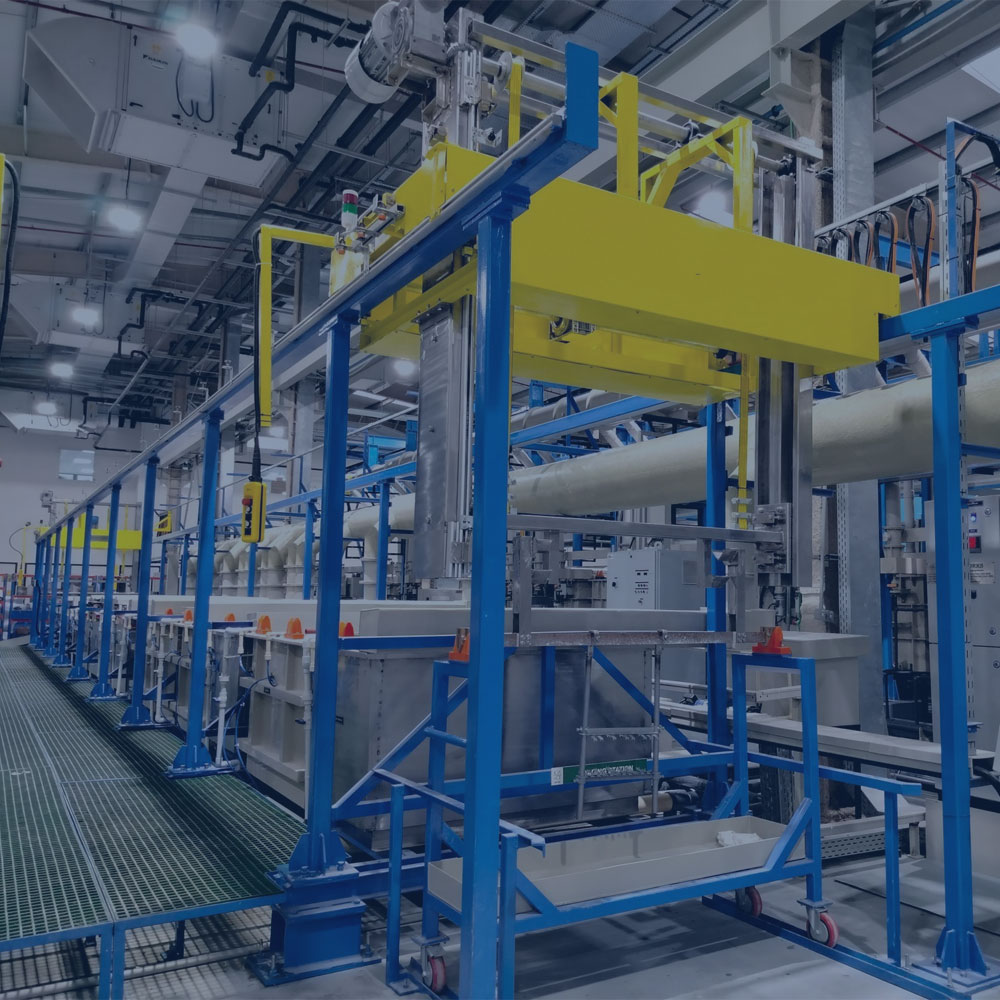
Faster Production Cycles: Mechanized and well-engineered pickling plants process metal faster than manual or poorly designed systems. Inline systems in particular allow continuous production without interruption, significantly improving throughput.
Chemical Efficiency: Modern pickling plants designed by STEP Techno Solutions LLP are engineered for optimal acid utilization. Precise concentration control, rinse water recycling, and efficient bath management reduce chemical consumption and operating costs.
Worker Safety: Advanced fumeless designs and enclosed acid handling systems protect workers from exposure to corrosive fumes and liquids. This is not just a regulatory requirement — it is a fundamental responsibility of every manufacturing facility.
Regulatory Compliance: India’s environmental and industrial safety regulations increasingly demand that metal processing facilities manage acid waste, fumes, and effluents responsibly. A properly designed pickling plant makes compliance straightforward and auditable.
Industrial Applications for Pickling Plants
Pickling plants serve a remarkably wide range of industries. Here is how different sectors rely on this critical process:
Steel and Metal Manufacturing: Rolling mills, forging units, and structural steel manufacturers use pickling as a mandatory step before galvanizing, coating, or further processing. The removal of mill scale from hot-rolled steel is one of the most common pickling applications globally.
Oil and Gas Industry: Pipes used in oil and gas pipelines must be free of all surface contamination before they are coated, wrapped, or welded. As a specialist Pipe Pickling Plant Manufacturer in India, STEP Techno Solutions LLP serves this sector with pipe-specific pickling systems that treat both internal and external pipe surfaces.
Automotive Industry: Automotive components made from steel — chassis parts, fasteners, springs, and body panels — undergo pickling before electroplating, phosphating, or powder coating. The cleanliness of the pickled surface determines the adhesion quality of the final finish.
Construction and Infrastructure: Reinforcement bars (rebar), structural sections, and fasteners used in construction projects are pickled before galvanizing to achieve maximum zinc-to-steel bonding and corrosion protection.
Wire and Cable Manufacturing: Wire drawing requires a perfectly clean and smooth metal surface. Pickling removes scale from wire rod before the drawing process, reducing die wear and improving wire quality.
Power Generation: Boiler tubes, heat exchanger tubes, and condenser tubes used in power plants are pickled to remove oxide layers before assembly, improving heat transfer efficiency and extending service life.
Construction and Technical Excellence
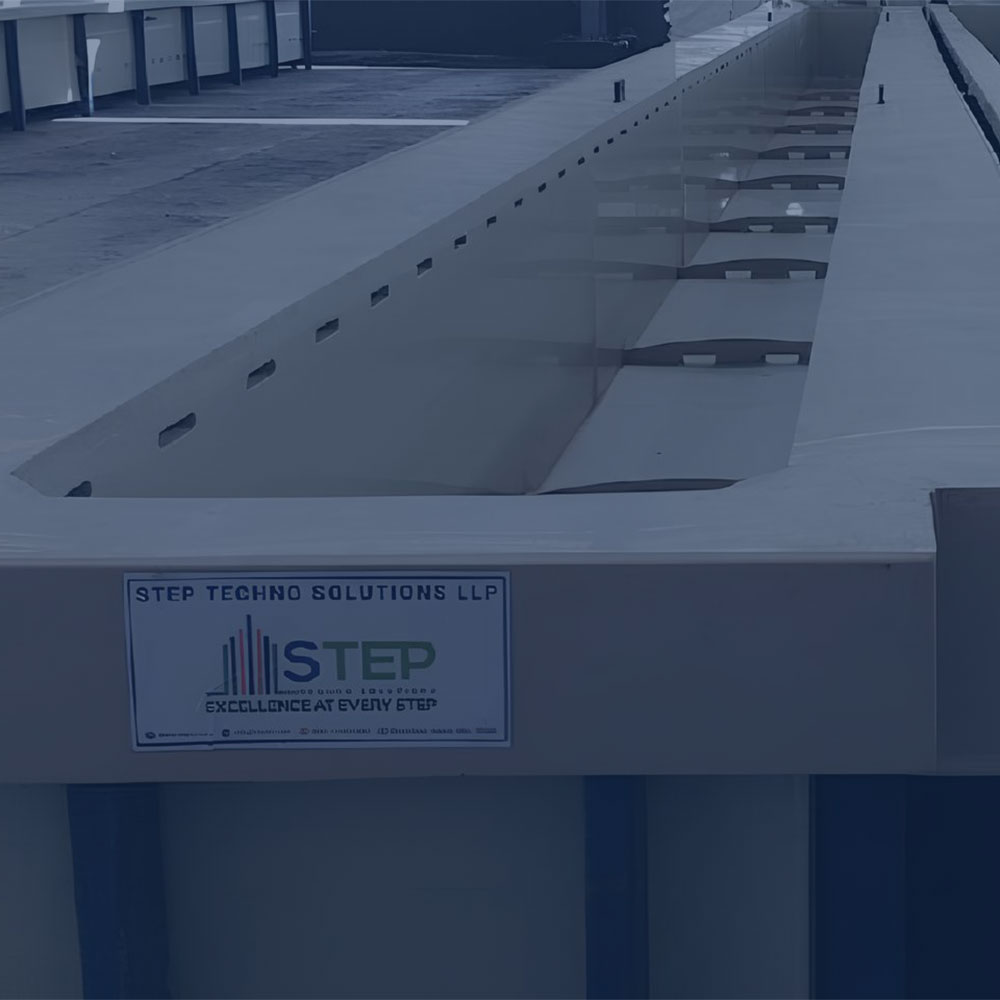
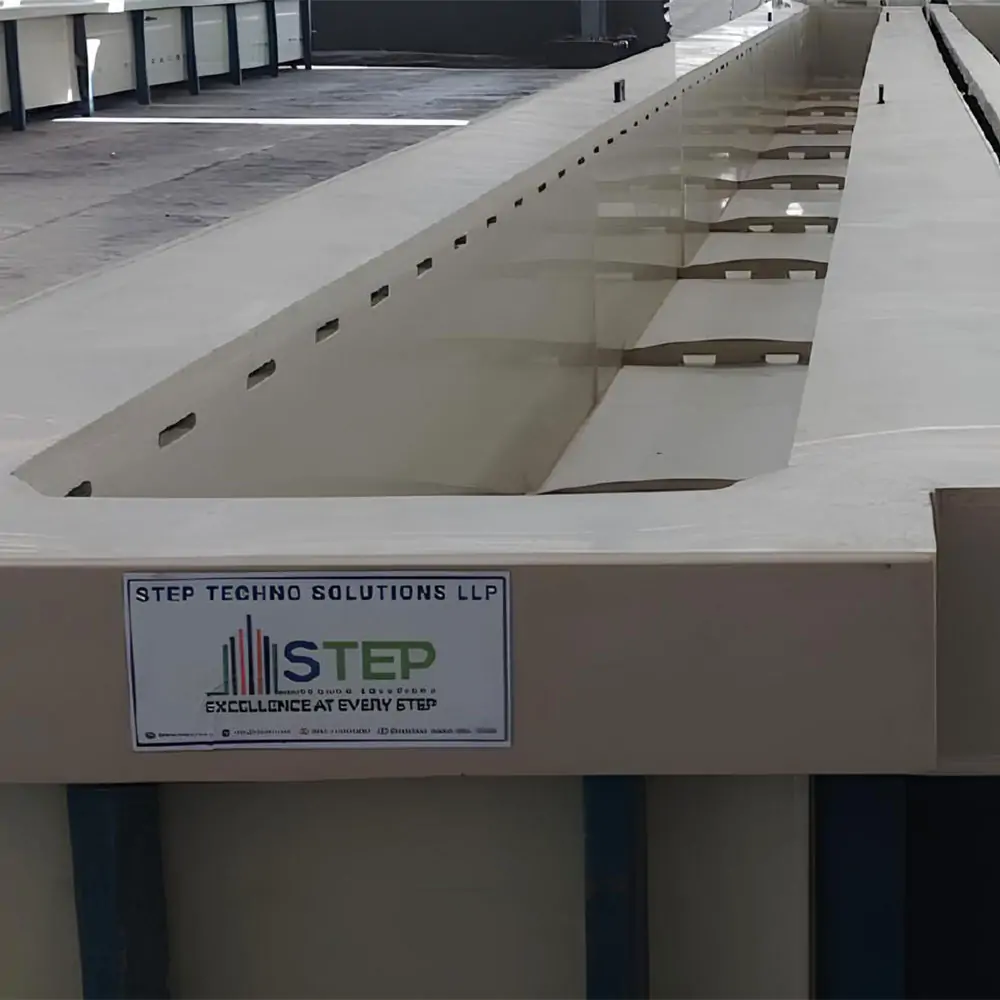
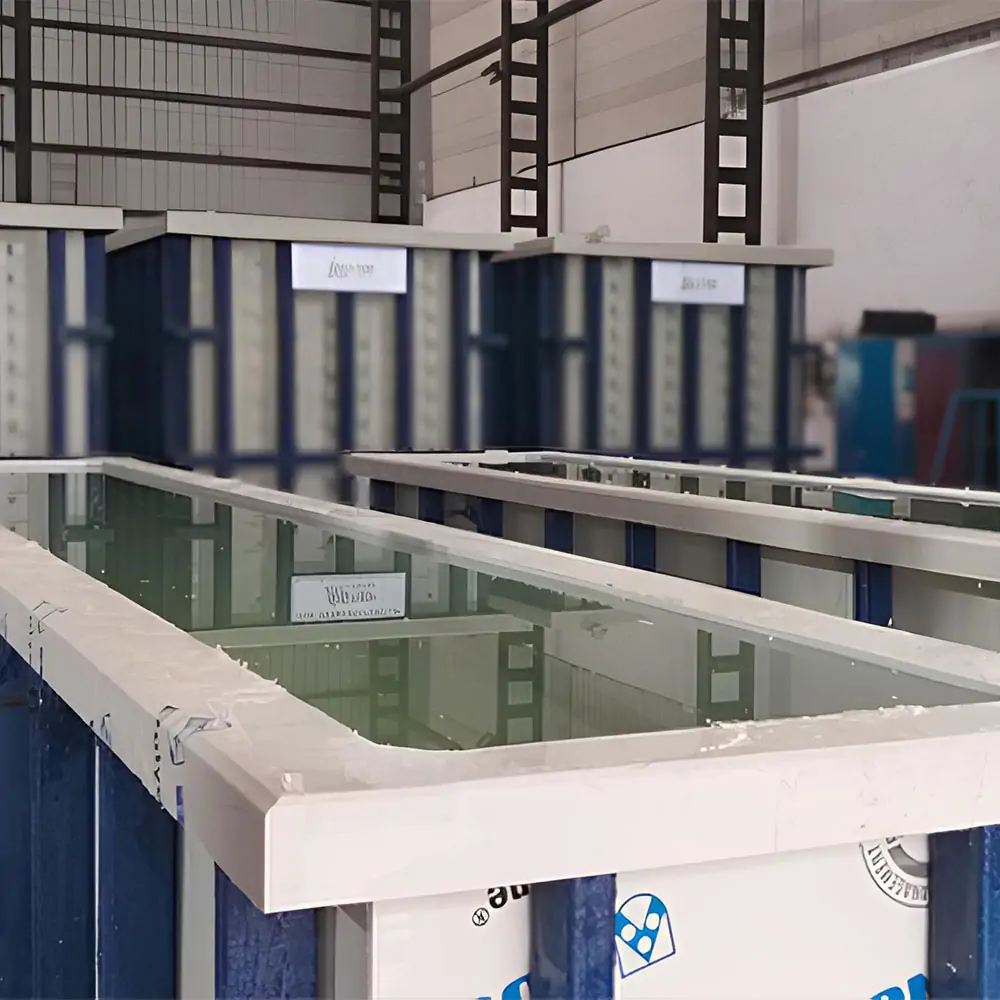
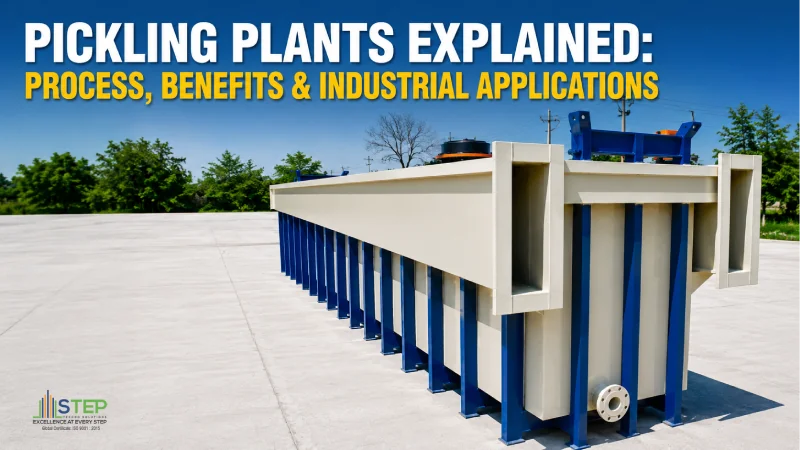
What sets a great pickling plant apart from an ordinary one is the quality of engineering that goes into its construction. STEP Techno Solutions LLP builds its pickling plants using advanced German welding technology combined with a unique fold-bend construction method. This approach delivers superior tank strength, leak resistance, and longevity — even under constant exposure to highly corrosive acid environments.
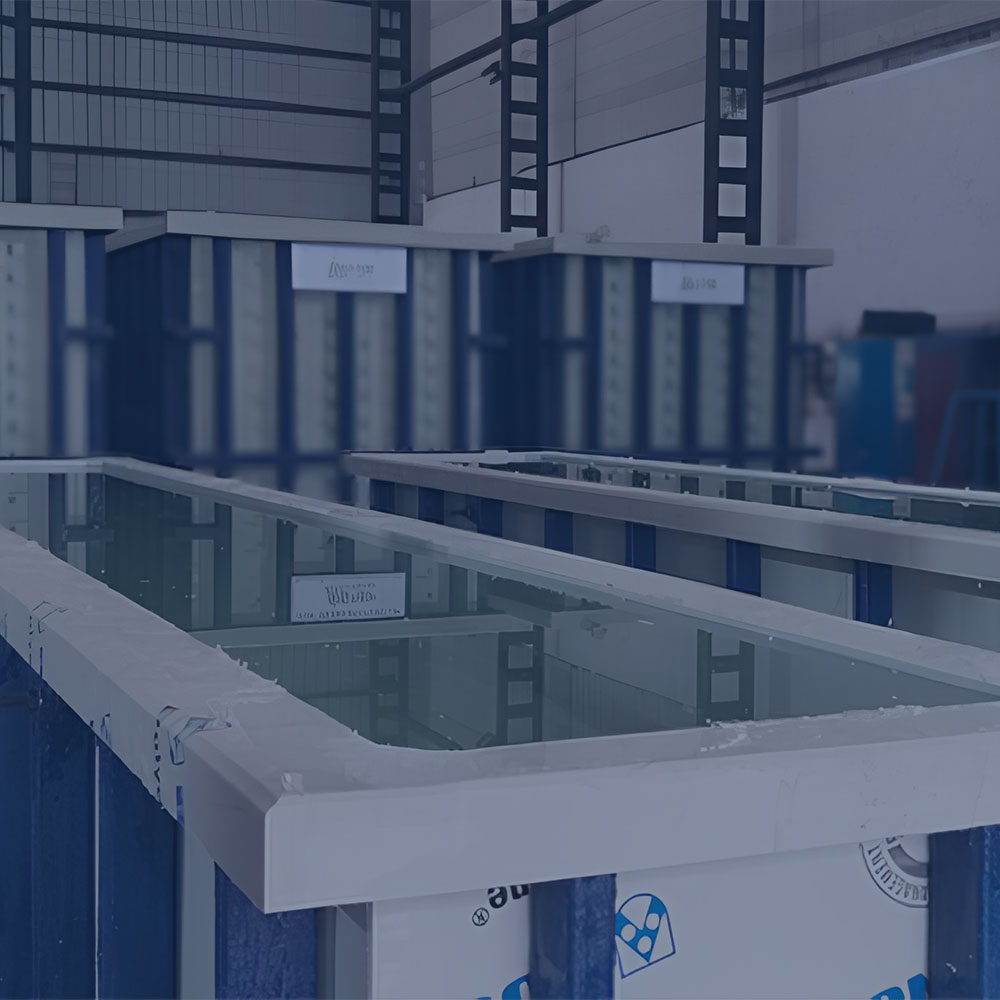
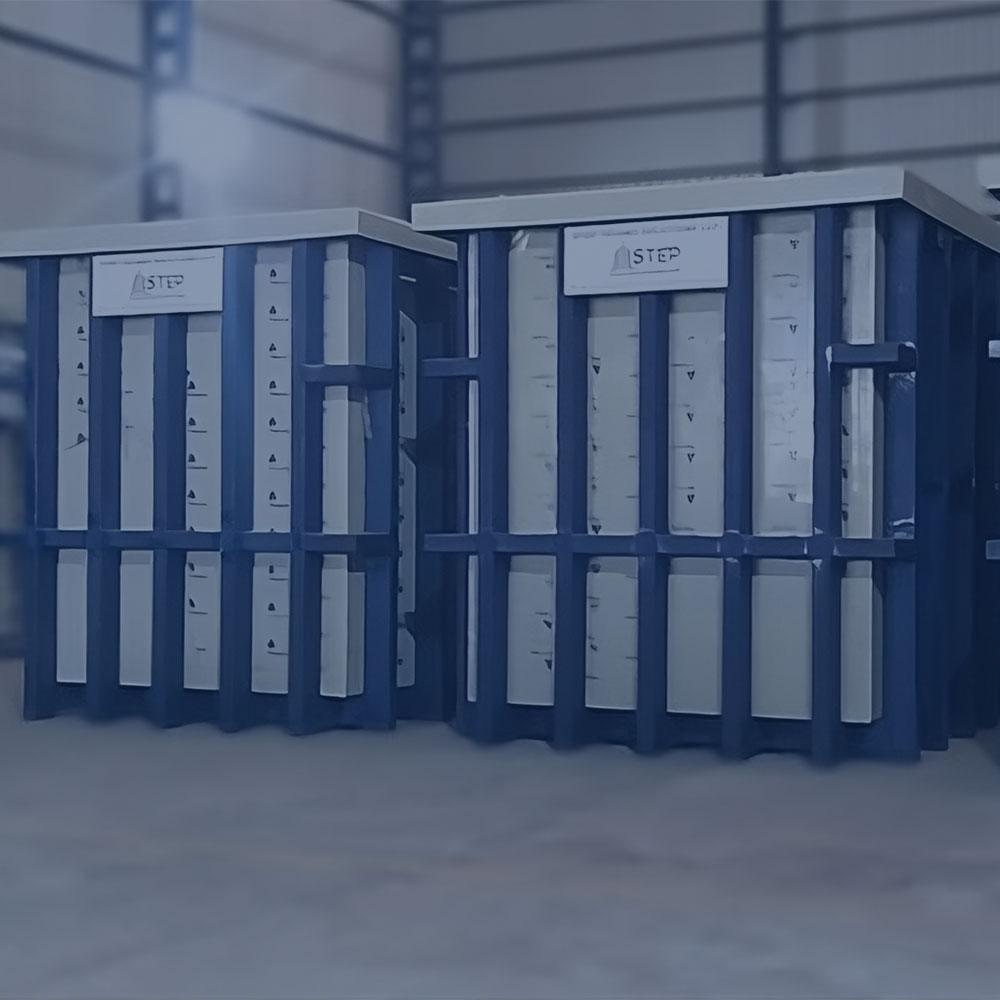
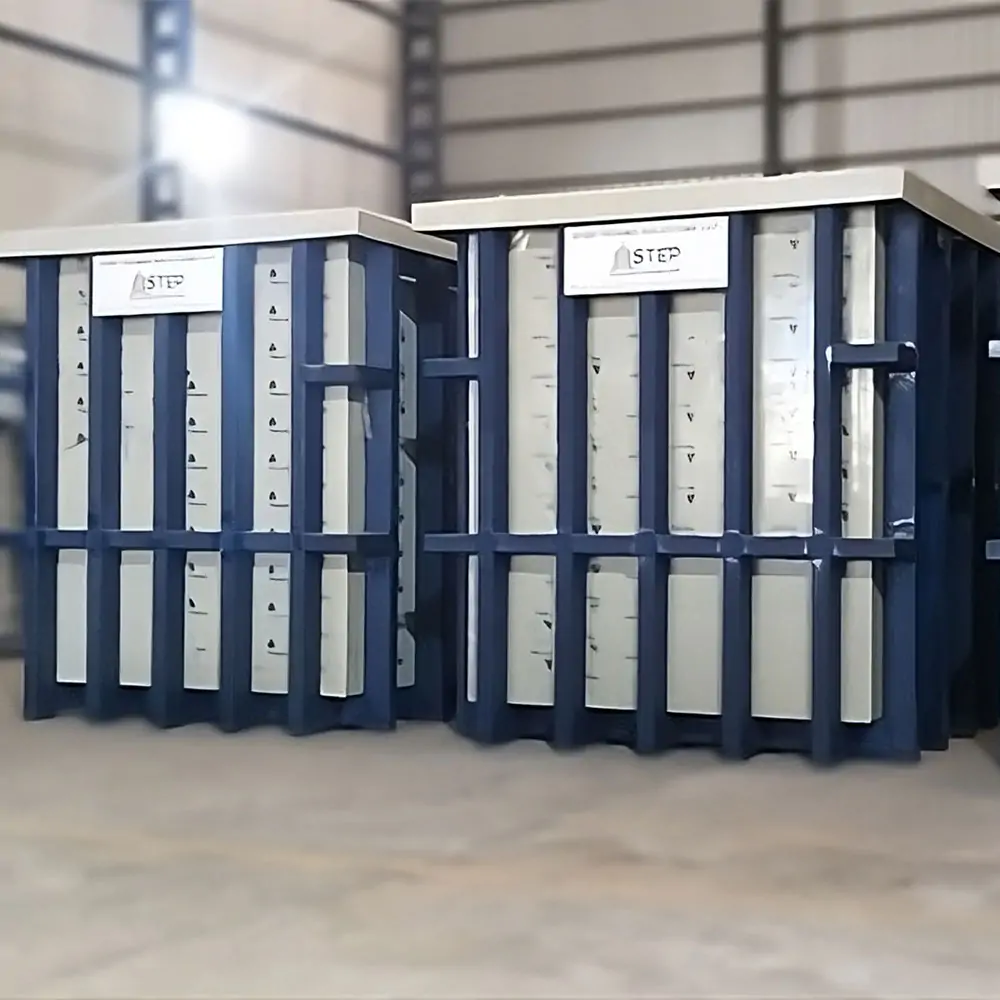
The tanks used in STEP Techno Solutions LLP’s pickling plants are constructed from high-quality polypropylene, selected specifically for its outstanding chemical resistance. A mild steel reinforcement structure is integrated into the tank body, providing maximum load-bearing capacity and structural stability. A special chemical resistance coating is applied to the reinforcement structure to prevent degradation over time.
All pickling plants from STEP Techno Solutions LLP come with ready-to-install configurations and are equipped with the necessary accessories — including acid dosing systems, temperature control units, rinse water management systems, and fume extraction provisions — making installation and commissioning straightforward and fast.
Why Choose us
STEP Techno Solutions LLP stands apart in the Indian market for industrial pickling systems because of its rare combination of engineering depth, manufacturing quality, and customer-centric service. With over 25 years of professional experience and a team of highly qualified engineers, the company brings technical mastery to every project it undertakes. As a recognized Pipe Pickling Plant Manufacturer in India, STEP Techno Solutions LLP designs every plant with the specific process requirements, production volumes, and safety standards of the client in mind. The company uses advanced German welding technology and premium polypropylene materials to build tanks that deliver decades of reliable service even in the most demanding chemical environments. From initial consultation and plant design to manufacturing, installation, and post-commissioning support, STEP Techno Solutions LLP manages the entire project lifecycle — making it a true turnkey partner for any industrial facility seeking a world-class pickling solution. Clients across India and international markets trust STEP Techno Solutions LLP not just for the quality of its equipment, but for the reliability, transparency, and technical support it delivers throughout the project and beyond.
Conclusion
Pickling plants are at the heart of quality metal processing across some of the most critical industries in the world. From steel mills to oil and gas pipelines, from automotive manufacturing to construction infrastructure, the need for clean, scale-free metal surfaces is universal. Choosing the right pickling plant — one that is engineered with precision, built with quality materials, and designed for safety and efficiency — makes all the difference in production outcomes. STEP Techno Solutions LLP, as a leading Pipe Pickling Plant Manufacturer in India, combines technical expertise, advanced construction methods, and deep industry knowledge to deliver pickling systems that perform reliably and stand the test of time in the most demanding industrial environments.
Explore STEP Techno Solutions LLP’s complete range of industrial pickling systems — engineered for precision, built for durability, and designed to match your exact production needs. Call us: +91 98988 75757 Email us: info@steptsl.com
Frequently Asked Questions
What does a Pipe Pickling Plant Manufacturer in India do?
A Pipe Pickling Plant Manufacturer in India specializes in designing and manufacturing industrial systems that chemically remove surface impurities from metal pipes. These facilities ensure that metal surfaces are clean and contamination-free before further processing, vital for high-quality production standards.
How does the pickling process work in a pickling plant?
The pickling process involves several steps, including pre-cleaning, immersion in an acid bath to remove oxides and scale, rinsing, neutralization, and drying. Each stage is crucial for achieving a clean metal surface ready for subsequent treatments.
What are the benefits of investing in a high-quality pickling plant?
Investing in a high-quality pickling plant leads to superior surface quality, extended coating life, and faster production cycles. Additionally, modern systems improve chemical efficiency and ensure better worker safety while complying with industrial regulations.
Which industries utilize pickling plants?
Pickling plants are utilized across various industries including steel and metal manufacturing, oil and gas, automotive, construction, wire and cable manufacturing, and power generation. Each sector relies on effective pickling processes to prepare metal surfaces for coatings and other treatments.
Why should I choose STEP Techno Solutions LLP as my Pipe Pickling Plant Manufacturer in India?
STEP Techno Solutions LLP stands out for its engineering expertise, quality manufacturing, and comprehensive customer service. With over 25 years of experience, they provide tailored pickling solutions built with advanced technology and high-quality materials, ensuring reliability and effectiveness in industrial settings.